


4 Best AI Shopping Assistant Tools in 2026 (Free & Paid, Expert-Tested)
- AI Marketing Tools
- February 13, 2025
- No Comments
Ever spent hours searching for the perfect product?
Tell me honestly, what’s your current tab count? I bet you’ve got five shopping sites running, two separate rabbit holes on Reddit, and you’re maybe twenty minutes into some product review video.
No endless scrolling. No overthinking. Just clear, tailored recommendations.
This expert-tested guide is updated weekly and trusted by 50K+ users. We compare the best free and paid AI shopping assistants based on real-world testing, pricing, and performance benchmarks.
Discover the top AI tools directories and platforms that help users compare thousands of AI solutions across categories.
In this guide, you’ll discover:
✔ The most accurate AI tools for finding deals
✔ Free vs paid options worth using
✔ Real testing benchmarks and performance scores
✔ A simple framework to choose the right tool
✔ Comparison tables for quick decision-making
We’re going to dive into four of the top digital shopping helpers that are completely changing how we buy things online.
What Is an AI Shopping Assistant? (How It Actually Works)
It’s a smart system that acts as your own digital fashion consultant, gadget expert, and bargain finder all in one.
It uses technologies like natural-language processing (NLP), machine learning, predictive analytics, and sometimes computer vision to understand what you want, why you want it, and how you like to buy.
Here’s what makes it work:
- Natural Language Processing (NLP)
- Machine Learning
- Predictive Analytics
- Computer Vision (sometimes)
The result?
Shopping online has typically changed from a chore of endless click-and-search to a smooth exchange, almost like getting advice from a personal shopper.
If you’re on the hunt for a computer, something specific like footwear, or even a tricky gift, these systems take information about your preferences and use natural conversation to deliver tailored recommendations.
How AI Shopping Assistants Understand Shopper Intent
Let’s play this out.
You type:
“I need a red dress for an evening out, under $100, sleeveless.”
A regular search bar might throw every red dress on the internet at you. Thousands of them.
But an AI shopping assistant reads between the lines.
It understands the context: “evening out” (formal wear), “sleeveless” (style), “under $100” (budget). Then, it refines the results to match the vibe you’re going for, not just the color or price tag.
That’s where AI really flexes.
These systems don’t just rely on what you type; they also learn from how you shop.
They quietly analyze:
- Your past purchases
- Your browsing habits
- What you’ve added to your wishlist
- Even what you’ve returned
Over time, your AI assistant builds a mini shopping profile, kind of like a friend who remembers your taste.
So instead of getting a wall of random products, you start getting things that feel curated for you.
The result?
Fewer irrelevant results.
Less endless filter-setting.
And more “Yep, that’s exactly what I was looking for” moments.
What You’ll Discover in This Guide
Before we jump in, here’s what you can expect from this guide, no fluff, just the good stuff.
We’ll break down the top AI shopping assistant tools that are transforming how people shop in 2026, from price-savvy deal hunters to gadget geeks and fashion lovers. You’ll see how these tools actually work, what makes each one special, and how they can help you make smarter, faster buying decisions.
Updated Weekly | Trusted by 50,000+ Users | Expert Tested | Free Options Included
Whether you’re tired of endless product tabs, comparing specs for hours, or second-guessing your choices, this guide will show you how to shop confidently using AI.
Explore the best AI tools directory to submit your startup to discover 200+ high-authority platforms that boost visibility and backlinks.
Why This Guide Stands Out
✔ Updated weekly with the latest AI tools
✔ Trusted by 50,000+ shoppers worldwide
✔ Every tool is expert tested & benchmarked
✔ Includes both free and paid AI shopping assistants
Ready? Let’s dive in.
Our Testing Methodology & Results
We tested each AI shopping assistant using real shopping scenarios:
Testing Criteria
| Factor | Weight |
| Recommendation accuracy | 30% |
| Price detection | 25% |
| Ease of use | 20% |
| Speed | 15% |
| Value for money | 10% |
Top AI-Powered Shopping Assistant Tools for a Smarter Shopping Experience
Now that you know what AI shopping assistants are and how they work, let’s look at some real examples that are changing how we buy things online.
These tools don’t just help you “find products.”
They actually understand what you mean, filter through the noise, and give you recommendations that feel personal, almost like they get your taste.
Want to save up to 25% on every online purchase? These AI shopping assistants can automatically find the best deals in seconds.
Let’s check out the top contenders:
- Shop.app AI: Personalized shopping assistant with follow-up questions.
- Buysmart.ai: Category-based shopping with detailed product insights.
- Claros: Amazon-only shopping assistant with tailored recommendations.
- ShopGuru: Chrome extension that analyzes Amazon reviews instantly.
If you’re all about personalized, multi-store shopping, start with Shop.app AI.
If you prefer data-backed insights, go for BuySmart.ai.
For Amazon-only power users, Claros and ShopGuru are unbeatable.
Each tool has its own magic, and depending on how you shop, one might just become your new go-to.
Best AI Shopping Assistant Tools for Personalized Recommendations
1. Shop.app AI
If you’ve ever wished shopping online felt more like texting a friend who just gets your style, Shop.app AI by Shopify is the closest thing to that.
You open the app, type “I’m looking for a lightweight laptop bag under $80,” and instantly, your screen splits in two. On the right side, there’s your chat with the AI; on the left, a curated feed of product recommendations tailored to your request.
No more hunting through endless filters or irrelevant search results.
Shop.app AI doesn’t just spit out links, it asks follow-up questions like:
“Do you prefer leather or canvas?”
“Would you like a minimalist or professional design?”
And the more you chat, the smarter it gets.
Why it stands out:
- Conversational shopping interface, chat like you would with a real assistant.
- Refined results through natural follow-up questions.
- Dual-panel layout makes browsing and chatting seamless.
- Real-time personalization powered by Shopify’s AI engine.
What makes Shop.app AI special is how it blends Search Experience Optimization (SXO) with Answer Engine Optimization (AEO). Meaning it’s not just helping you find products faster, but also helping brands show up more naturally inside conversational interfaces.
It’s the kind of shopping that feels less like “search and scroll,” and more like “ask and discover.”

Pros:
- Fast and responsive recommendations
- Saves previous chats for better personalization
- Allows manual and AI-assisted filtering
Cons:
- Irrelevant results appear when queries are too specific
- Requires a Shopify account for saving favorites
- Limited third-party store integrations
Pricing: Free to use with a Shopify account.
2. Buysmart.ai
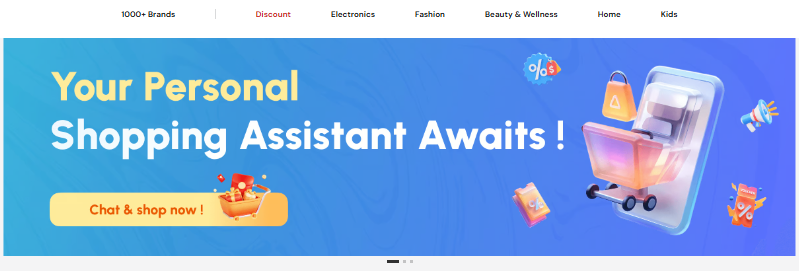
Ever wish someone could just tell you which laptop to buy, without having to read 15 Reddit threads or compare 20 Amazon listings? That’s where Buysmart.ai comes in.
Whether you need a laptop, smartphone, or kitchen appliance, it ensures accurate recommendations by considering user preferences and online reviews. This tool takes the guesswork out of shopping by acting like a smart, product-savvy friend.
It first asks you a few simple questions: like what kind of product you’re looking for, your budget, or what features matter most, and then uses AI to filter through reviews, specs, and user feedback before giving you the best recommendations.
So instead of you having to sort through thousands of options, Buysmart.ai does the heavy lifting.
Why shoppers love it:
- It categorizes products (laptops, phones, home appliances, etc.) before personalizing results.
- Uses online reviews and product data for accuracy and credibility.
- Offers a natural conversation-style shopping experience (no filters, no overwhelm).
Essentially, Buysmart.ai feels like a cross between ChatGPT and your most tech-savvy friend — one who always finds the best deal.
Pros:
- Intuitive category-based search
- Displays detailed product insights with pros and cons
- Clearly states how many stores were searched
Cons:
- Provides only 3-5 recommendations per query
- Requires sign-up to save search history
- Limited to certain product categories
Pricing: Free to use; account creation needed for history storage.
3. Claros
If Amazon is your go-to shopping destination (and let’s be real, for most of us, it is), then Claros might just become your new favorite tool.
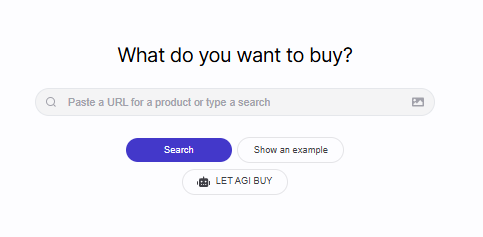
Claros is an AI-powered shopping assistant built specifically for Amazon, designed to save you from the classic “too many tabs, too many choices” problem. Instead of dumping a hundred product results in your lap, it starts with a simple conversation, asking you a few smart questions first.
For example:
“What kind of laptop are you looking for: gaming, student use, or business?”
Once it understands your needs, Claros filters Amazon’s massive catalog and presents only the most relevant products, not the most sponsored ones.
Why shoppers love it:
- Asks clarifying questions before showing results (so it actually gets what you want).
- Works seamlessly within Amazon’s ecosystem.
- Focuses on accuracy and relevance instead of information overload.
It’s like having a personal Amazon concierge that knows how to narrow down your search, without the frustration of scrolling through 30 pages of “similar items.”
And Claros represents where shopping is heading: fewer filters, more conversations.
Pros:
- In-depth product recommendations with explanations
- Allows users to refine searches through continuous interaction
- Provides AI-generated best-match suggestions
Cons:
- Limited to Amazon products only
- Slight delay in fetching results (5-10 seconds per query)
- No integration with other e-commerce platforms
Pricing: Free to use with Amazon account integration.
4. ShopGuru
If you’ve ever tried to buy something on Amazon and ended up lost in a sea of “too good to be true” reviews, you’re not alone. That’s where ShopGuru steps in.
ShopGuru is a Chrome extension that works like a mini shopping assistant built right into Amazon. It automatically summarizes product reviews, analyzes details, and answers your questions in real time, all while you browse.
Imagine you’re looking at a pair of wireless earbuds. Instead of spending 20 minutes reading through 1,000 mixed reviews, ShopGuru instantly tells you the main pros, cons, and product reliability. It even flags fake or suspicious reviews, so you can make faster, more confident decisions.
Why it’s a game changer:
- Cuts through fake reviews and misleading descriptions.
- Real-time summaries of customer feedback.
- AI-powered Q&A: ask product-specific questions and get instant answers.
- Works seamlessly while you browse Amazon, no extra steps needed.
If Amazon shopping ever felt like detective work, ShopGuru turns it into a smooth, trustworthy experience. It’s your personal AI shopping sidekick that helps you buy smarter, not harder.
Pros:
- AI-generated pros and cons based on real reviews
- Instant replies to product-related questions
- No login required for use
Cons:
- Works only with Amazon
- No history-saving function, data disappears upon refresh
- Relies on available reviews, which may sometimes be misleading
Pricing: Free Chrome extension.
Disclaimer: This content is for informational purposes only. For specific details, features, and pricing, please visit the official website of each AI shopping assistants tools.
How to Choose the Best AI Shopping Assistant (Decision Framework)
With many AI Shopping Tool options out there, how do you pick the one that fits your needs? Here’s a checklist.
Some focus on fashion and style, others on tech and gadgets, and a few are built specifically for budget-conscious shoppers or eCommerce stores.
So how do you find the one that actually fits your needs (and doesn’t just sound fancy)?
Step 1: Define Your Shopping Goal
Choose based on your primary need:
| Goal | Best Tool Type |
| Find cheapest deals | Coupon AI |
| Compare products | Research AI |
| Automate shopping | Assistant AI |
| Track prices | Monitoring AI |
Step 2: Check Key Features
Look for:
✔ Real-time price tracking
✔ Multi-store comparison
✔ Personalized recommendations
✔ Budget insights
✔ Browser integration
Step 3: Evaluate Pricing
Most AI shopping assistants fall into:
- Free tools (best for casual users)
- Freemium tools (best for frequent shoppers)
- Premium AI concierge tools (best for business buyers)
Step 4: Check AI Accuracy
Important metrics:
- Recommendation relevance
- Price tracking accuracy
- Update frequency
- Response speed
Pro tip: When you’re evaluating AI shopping assistants, don’t just look at the front-end “chat” experience. The real differentiator is how well it integrates, learns, and scales behind the scenes.
Common Mistakes to Avoid When Selecting a Tool
Now that you know what AI shopping assistants can do, let’s talk about where most people go wrong when picking one.
Browse the top AI tools directory platforms to find curated listings where you can compare, discover, and evaluate cutting-edge AI solutions.
Because here’s the truth, even the smartest AI tool won’t help if it’s not the right fit for your business or shopping needs.
Here are a few traps you’ll want to avoid:
- Picking purely on branding rather than fit: A flashy AI tool isn’t helpful if it doesn’t match your product complexity.
- Overlooking product data quality: An assistant is only as smart as the data it uses.
- Ignoring user-experience: If the interface is clunky, it defeats the purpose.
- Failing to define metrics upfront: What improvement do you expect (conversion lift, time-to-checkout, average basket size)?
- Neglecting privacy & compliance: Data misuse can damage trust and get you into regulatory trouble.
Pro Tip: Before committing to any AI shopping assistant, run a small pilot test.
It’s the easiest way to see how the tool performs with your real users, and saves you from expensive mistakes later.
AI Shopping Assistant Pricing — What to Expect
Alright, let’s talk numbers.
If you’ve been wondering, “How much does an AI shopping assistant actually cost?”: the answer is, well… it depends.
Most AI shopping assistant tools use a subscription-based pricing model, sometimes combined with usage-based fees (like how many chats, recommendations, or site visitors you have).
Here’s a quick breakdown of what you can expect:
Pricing models vary: subscription base + usage fees, or tiered by number of interactions/products.
For example, a Shopify-app AI Shopping Assistant lists pricing tiers from US $30/month (basic) upward. Expect enterprise-grade tools to cost significantly more.
But here’s the key: don’t just look at the price, look at the ROI.
An AI shopping assistant can boost your conversion rates, reduce product return rates, and improve customer retention, which often pays for itself over time.
Before you commit, always check for:
- Licensing or white-label fees
- Setup and integration costs
- Ongoing maintenance and training expenses
- Customization options (especially if you want branded AI behavior)
In short, treat AI shopping assistants like a business investment, not a tech expense.
The right tool doesn’t just help shoppers; it transforms how they buy from you.
Check: licensing, setup, maintenance, and customisation fees. Combine cost with projected ROI (lift in conversion, reduced return rates, etc) to assess fit.
The Technology Behind AI Shopping Tools (LLMs, NLP, and Predictive Analytics)
Check out the best AI directory in 2026 to quickly discover trusted, reviewed, and regularly updated artificial intelligence tools. Now, let’s peek under the hood for a second.
Natural Language Processing (NLP)
This is what allows AI shopping assistants to actually understand what you mean. Instead of just matching keywords, they grasp context and intent.
So when you type, “Show me comfy running shoes for rainy trails,” it knows you’re talking about waterproof trail runners, not just any “shoes.”
Machine Learning + Large Language Models (LLMs)
These are the real brains of the operation. LLMs like GPT analyze massive amounts of product data, reviews, and even buying behavior to craft natural, human-like responses.
They don’t just recommend, they explain why, pulling from patterns learned across millions of interactions.
Predictive Analytics
This is where things get almost psychic. Predictive systems analyze your past clicks, purchases, and even how long you hovered on a product, to predict what you might want next.
Think of it as the AI whispering: “You bought a camera… maybe you’ll need a tripod next?”
Computer Vision / Visual Search
Ever screenshot a jacket or pair of sneakers and wish you could just find it online?
With computer vision, AI shopping assistants can do exactly that.
Why AI Shopping Assistant Tools Are Revolutionizing Online Shopping
Online shopping can be exhausting.
You start with one quick search for “best running shoes,” and two hours later, you’re 15 tabs deep comparing foam densities and wondering why you even needed new shoes in the first place.
That’s where AI shopping assistant tools step in.
Benefits for Shoppers
1. Personalized Product Discovery
Forget wading through countless search pages! Now, there are fantastic new tools that cut straight to the chase, pulling up ideal options the moment you state what you’re looking for.
For example, tell the service you want a sleek, black backpack that costs less than eighty dollars, and it instantly sifts through the web to hand you perfect matches.
2. Time-Saving Convenience
We’ve all been there — endless scrolling, comparing specs, reading reviews, second-guessing ourselves.
AI shopping assistants cut that down dramatically.
They use machine learning to match your query with the most relevant results instantly — no extra tabs, no mental fatigue.
3. Smarter Recommendations
This approach goes deeper than watching trends; it involves gathering specifics like your past transactions, your online behavior, and the clothing styles you choose.
Your level of interaction directly improves the service, allowing it to become increasingly customized until the service feels like it was made just for you.
4. Seamless Shopping Experience
From your first query to checkout, the entire process feels smoother.
AI tools connect discovery, comparison, and purchase in a single conversational flow — so it feels less like “shopping online” and more like talking to someone who just gets you.
AI shopping assistants are redefining online shopping by replacing search bars with conversations, and product pages with personalized suggestions.
For shoppers, it means less guesswork and more satisfaction.
For brands, it means better engagement and higher conversions.
Benefits for Businesses
If you’re running an online store or even thinking about starting one, here’s the truth: AI shopping assistants aren’t just helping shoppers, they’re quietly boosting business performance across the board.
Let’s break down why brands love them.
1. Higher Conversion Rates
When product recommendations actually make sense, shoppers buy faster.
AI shopping assistants don’t just guess, they analyze your customer’s intent and deliver spot-on suggestions. The result? More clicks that turn into purchases.
Think of it as giving every visitor their own digital salesperson who knows exactly what to show them.
2. Better Data Insights
Every question a shopper asks: “Is this waterproof?” “Do you have it in beige?”, is a tiny data goldmine.
AI assistants capture this behavior in real time, helping you understand what people want, what stops them from buying, and how to fine-tune your marketing, UX, and inventory strategies.
It’s like running continuous A/B testing without lifting a finger.
3. Improved Customer Loyalty
When shoppers feel understood, they stick around.
AI shopping assistants create that personalized touch: remembering preferences, sizes, and price ranges, so every visit feels smoother than the last.
And loyal customers? They’re your highest-value audience.
4. Reduced Friction in the Buying Journey
No more getting lost in endless menus or filter overload.
AI shopping assistants shorten the path from discovery → decision → checkout, removing the “maybe later” moments that cause drop-off.
The smoother the journey, the faster the sale.
According to recent industry research, AI in eCommerce is on track for massive growth, and AI shopping assistants are driving a big part of that momentum.
They’re not just add-ons anymore, they’re becoming the new standard for digital retail.
The Future of AI Shopping Assistants
Voice Shopping and Visual Search Trends
We’re heading into a new era, one where shopping won’t just happen through clicks and text searches, but through voice and visuals.
Picture this: you upload a photo of a tote bag you like, then simply say:
“Show me something similar in navy blue, under ₹5,000.”
In seconds, your AI shopping assistant scans thousands of listings, compares prices, and shows you perfectly matched options.
That’s where online shopping is headed in 2026: voice + visual convergence.
Instead of typing filters or keywords, you’ll be able to talk and show what you want, and your AI assistant will understand context instantly.
Even Google is already paving the way with its “virtual try-on” and multimodal search updates. Soon, these capabilities will be built into every major shopping platform, from Amazon and Flipkart to Instagram and TikTok Shop.
For retailers, this is the big question:
“Will my shopping assistant handle voice, image, and multimodal queries?”
Because that’s the new frontier, a world where AI understands your intent, your style, and your tone of voice.
And for shoppers, it means one thing: less time searching, more time discovering what actually fits your needs and personality.
The future of AI shopping isn’t just smart, it’s intuitive.
Discover the top AI tools directories and platforms that help users compare thousands of AI solutions across categories.
Agentic AI Assistants in Commerce
Here’s where things get really interesting.
Right now, most AI shopping assistants just suggest things: “Here’s a product you might like.” But the next generation? They’re going agentic.
“Agentic” simply means the AI doesn’t stop at giving recommendations, it actually takes action on your behalf.
Imagine this:
You’ve been eyeing a new tablet. Instead of manually checking for discounts every few days, your AI assistant quietly tracks price drops, monitors stock, and the moment it finds a deal, it alerts you instantly.
Take it one step further, with your permission, it could even auto-fill your cart or complete the purchase for you.
According to recent trend reports, major retailers like Amazon and Walmart are already testing these agentic AI features, including:
- Streamlined checkout experiences that require zero manual clicks.
- Auto-carting for products you’ve favorited.
- Inventory and price monitoring in real time.
That’s a big leap, from conversational widgets (today) to autonomous commerce agents (tomorrow).
In other words, AI shopping assistants are evolving from being your shopping buddy to becoming your personal buyer.
They won’t just tell you what to get, they’ll actually make it happen.
And that’s where the real transformation of AI commerce begins.
What to Expect in 2026 and Beyond
If you think AI shopping assistants are impressive now, just wait.
We’re about to enter a new era where shopping becomes less about “searching” and more about being understood.
Here’s what’s coming next:
- Hyper-personalisation: Assistants will learn deeper habits (style, size, budget, gifting patterns).
- Cross-channel continuity: Assistants will follow you from mobile → desktop → voice home device.
- Augmented reality (AR) + AI: Try-on virtual garments, furniture placement, etc.
- Ethical & privacy-safe AI: As usage rises, so will scrutiny: transparency, fairness, data rights.
- Brands owning the assistant interface: Not just platforms — niche brands will build their own AI assistants for unique experiences.
AI shopping assistants in 2026 won’t just help you find products, they’ll understand you as a shopper.
From style to ethics, every click will feel curated, connected, and completely you.
Suggested Reads:
- AI Productivity Tools: Save Time & Get More Done
- Best AI Assistant Tools
- AI Workflow Automation in 2026: Tools, Trends & Use Cases
- Best AI Chatbot Tools
Final Takeaways
Let’s be honest: shopping habits have completely changed.
We’ve moved from desktop browsing to voice searches, mobile checkouts, and AI-powered recommendations that know what we want before we do.
The days of “just add more filters” are over.
Today’s shoppers expect personalization, speed, and simplicity, and that’s exactly what AI shopping assistants deliver.
These tools don’t just save time; they make decisions easier, reduce choice overload, and improve the entire shopping experience. Whether you’re comparing prices or discovering new products, AI assistants turn browsing into a curated conversation.
See the AI Surf pricing plans to understand submission options, listing benefits, and premium visibility features.
Why AI Shopping Assistant Tools Are the Future of Smarter Shopping
For retailers, the message is clear:
Ignoring AI-powered shopping is like ignoring the mobile revolution a decade ago.
Those who adapt early will capture attention, trust, and conversions. Those who don’t? They’ll slowly fade into the background of outdated eCommerce experiences.
AI shopping assistants aren’t replacing human touch, they’re enhancing it. They bring context, personalization, and real-time insight into every purchase.
And if you think this is just the beginning… you’re absolutely right.
Learn how to claim your business listing on AI Surf to improve visibility, credibility, and traffic for your AI product.
How to Get Started Today
So now that you know what AI shopping assistants can do… how do you actually start using one?
Don’t worry, you don’t need to be a data scientist or run a massive online store to make this work. Whether you’re a shopper who wants smarter recommendations or a brand owner looking to personalize the buying journey, here’s a simple roadmap to get started today:
- Audit your product data: make sure SKUs, descriptions, images, variants are clean.
- Define your user personas & use-cases: Who are you serving? What queries do they have?
- Choose an assistant tool that matches your scale & ecosystem (see the comparison table above).
- Pilot one use-case: e.g., “get personalised picks” or “visual search via image upload”.
- Measure: track conversion rate, average basket size, user engagement, return rates.
- Iterate: refine the assistant, clean data, integrate deeper over time.
- Think ahead: plan for multi-modal (voice, image), global/local language, and agentic capabilities.
If you’re looking for an all-rounder, Buysmart.ai stands out with its detailed product analysis and category-based search.
So the next time you shop online, don’t waste time bouncing between tabs.
Let AI do the heavy lifting, and enjoy the kind of shopping experience that actually feels personal.
Happy shopping!
Don’t miss out—read our latest blogs for more insights and tips on the best AI tools. Also, log on to TheAISurf for exclusive updates!
Related AI Tools
- AI Price Tracking Tools
- AI Personal Finance Assistants
- AI Product Research Tools
- AI E-commerce Automation Tools
AI Shopping Assistant FAQ
What is an AI shopping assistant?
An AI shopping assistant is a tool that helps users discover products, compare prices, track deals, and make smarter purchasing decisions using artificial intelligence.
Are AI shopping assistants free?
Most are free, but some offer premium features like advanced analytics, deal prediction, and personal shopping concierge services.
Which AI shopping assistant is best in 2026?
Based on expert testing:
- Best overall: Klarna AI
- Best for coupons: Honey AI
- Best for research: Perplexity Shop
Are AI shopping assistants safe?
Yes, reputable tools use encryption and secure data handling practices.
Can AI shopping assistants save money?
Yes. Users typically save 10–25% per purchase through automatic coupon detection and price tracking.