


AI Search vs Traditional Search: Is Google Really Dying?
- Search
- August 18, 2025
- No Comments
You’ve probably seen the headlines.
“R.I.P. Search.”
“Google is over.”
“AI is taking over search.”
A recent LinkedIn post fanned the flames even more, boldly proclaiming the death of traditional search. And honestly, it’s tempting to believe it—especially with the buzz around ChatGPT, Claude, Perplexity, and AI-powered search assistants.
But let’s not lose the plot. While AI search is undeniably on the rise, the rumors of Google’s demise? Greatly exaggerated.
The 34x Reality Check: AI Search Isn’t Replacing Google Yet
Let’s go straight to the numbers.
According to fresh SEMrush data (April 2024 – March 2025):
- AI chatbots had 55.2 billion visits (+80.92% YoY)
- Search engines pulled in a whopping 1,863 billion visits (-0.51% YoY)
That’s 34x more traffic going to traditional search. Yes, ChatGPT leads the AI crowd with 47.7B visits—but Google alone clocks in at 1,631.5B.
So no, search isn’t dead—it’s just evolving.
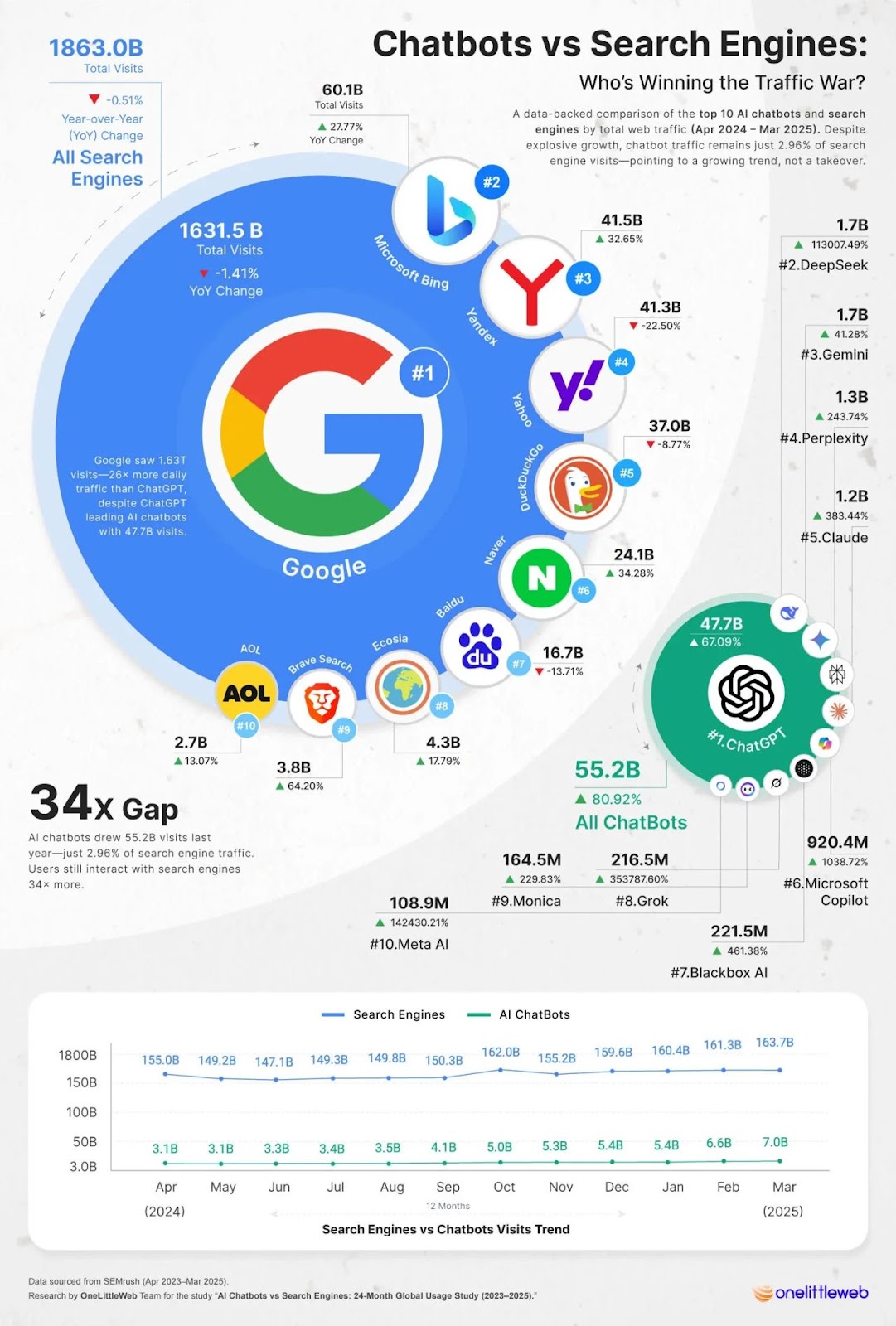
Source : Linkedin
Google & Bing Aren’t Sleeping on AI Either
Here’s the twist most “AI killed search” posts miss:
Traditional search engines are already using AI under the hood.
- Google’s Gemini AI powers its SERP Answer Boxes.
→ Nearly 60% of Google searches are now zero-click.
So that question you typed into Google? Chances are, AI already helped answer it.
Search vs AI Search: A False Binary?
It’s not AI vs search anymore.
It’s more like:
- Traditional search, now enhanced with AI.
- And dedicated AI chatbots, expanding how people ask and find.
The boundaries are blurred.
For example, when you type a hotel name into Google and see booking options, reviews, and AI summaries—that’s AI-powered search at work.
Should You Abandon SEO and Traditional Search Marketing?
Definitely not. Especially if you’re in industries like travel or hospitality.
Search marketing—including:
- Google Ads (GA)
- Google Hotel Ads (GHA)
- SEO for organic listings
Still contributes over 50% of hotel website bookings.
So while AI search is rising, it’s not stealing your traffic yet—at least not in bulk.
What Should You Do Instead? Start Thinking AIO.
AIO = Artificial Intelligence Optimization
This is the AI-age version of SEO.
Here’s how AIO differs from traditional keyword-based SEO:
| Old SEO | New AIO |
| Stuff content with keywords | Get cited by trustworthy sources |
| Rank pages on SERPs | Be mentioned across the web |
| Optimize your own site | Optimize your brand footprint |
How to Start with AIO:
- Get cited on reputable blogs, review sites, YouTube, and social media
- Create content worth quoting—stats, insights, original research
- Focus on “earning mentions” not just “ranking pages”
SEO firm VertoDigital found that only 25% of AI-generated answers pull from your website. The rest?
→ Social media, blogs, news sites, customer reviews.
Internal Links to Boost Your AIO Strategy:
- AI Workflow Automation: The Future of Business Efficiency
- AI Communication Coaches: Elevate Your Public Speaking
Final Thoughts: Search Isn’t Dead—It’s Just Morphing
Yes, AI search is growing fast.
Yes, tools like ChatGPT are changing user behavior.
But no, traditional search is not dead—not by a long shot.
Instead, we’re entering a hybrid era. One where SEO meets AIO. Where Google and ChatGPT coexist, not compete.
Explore more AI tools, trends, and strategies at TheAISurf and learn more about Perplexity.ai.
FAQs
Is AI Search replacing traditional search engines?
No. AI search is growing rapidly, but traditional engines like Google still handle 34x more traffic globally. (SEMrush, 2025)
Why are zero-click searches rising?
The information supplied by Google’s AI-enabled Answer Boxes is so comprehensive that users often don’t need to visit a website. Consequently, ‘zero-click’ queries have become more common, representing almost 60% of all searches.
What is AIO (Artificial Intelligence Optimization)?
AIO focuses on earning recognition from AI engines by getting your brand mentioned across the web—on blogs, news sites, social media, etc.