



Steal My SEO Keyword Research Spreadsheet
- SEO
- September 25, 2025
- No Comments
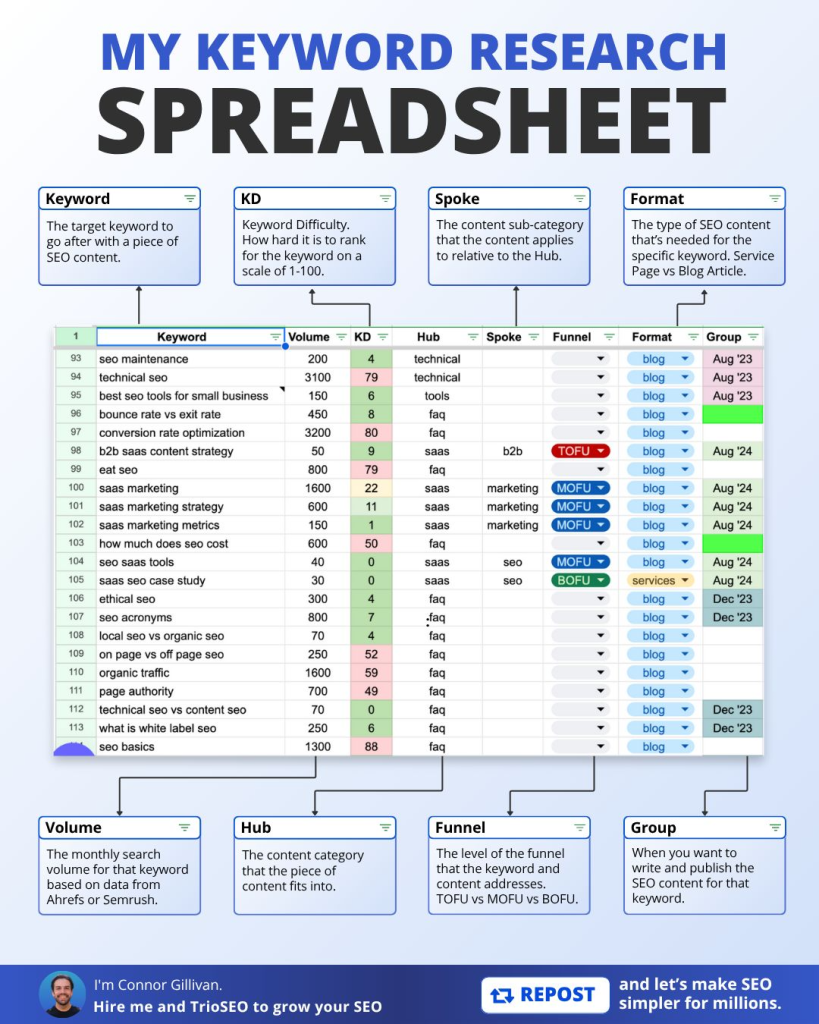
Keyword research isn’t rocket science. Seriously—it’s just about being organized and intentional. The problem? Most people treat it like guesswork. That’s why I built a simple SEO keyword research spreadsheet. It keeps me focused, systematic, and confident I’m going after the right terms.
Today, I’ll break down the exact framework so you can copy it, tweak it, and actually use it. No fluff. No overcomplication.
Source: Linkedin User
The 8-Column System That Powers My Keyword Research
An SEO keyword research spreadsheet is a structured system for organizing target keywords, search volume, difficulty, category, and intent. It helps you prioritize topics, match searcher intent (TOFU, MOFU, BOFU), and plan content formats. With a sheet, keyword research becomes repeatable and scalable.
Here’s the exact breakdown of my spreadsheet. Each column has a purpose.
1. Keyword
The actual search term you’re targeting. Example: “AI workflow automation.”
2. Volume
Monthly search volume (from Google, Ahrefs, or SEMrush). Aim for 30+ searches/month—that’s the sweet spot between relevance and reach.
3. KD (Keyword Difficulty)
A score (usually 0–100) showing how hard it is to rank. Match it against your site’s Domain Rating (DR). Don’t chase skyscraper terms if your site is a bungalow.
4. Hub
The main category your keyword belongs to. Think of it as the “parent topic.”
Example: “AI tools.”
5. Spoke
A sub-category branching from your hub.
Example: “AI image generators.”
6. Funnel
What’s the intent?
- TOFU: Awareness (“what is AI workflow automation”)
- MOFU: Consideration (“best AI workflow tools”)
- BOFU: Conversion (“buy AI workflow automation software”)
7. Format
What type of content ranks? Blog post? Service page? Comparison table? Let Google tell you. SERPs are your blueprint.
8. Group
When you’ll publish it. I assign keywords by month, so my calendar stays organized.
Why This Spreadsheet Works
Most keyword research fails because it’s random. With this sheet, you:
- Stay organized (no more scribbled notes).
- Match search intent to the right funnel stage.
- Spot content hubs (great for internal linking).
- Build repeatable systems instead of “one-off” SEO stabs.
It’s not rocket science. It’s discipline + structure.
How to Build Yours (In Under 15 Minutes)
- Open Google Sheets or Excel.
- Create 8 columns with the headers above.
- Use free tools like Ubersuggest, Google Keyword Planner, or Ahrefs Free Keyword Generator to pull data.
- Start plugging in terms.
Pro tip: Group your Hubs early—this makes interlinking a breeze.
Suggested Reads:
How to Steal Backlinks (Ethically) From Competitors
Master the 2025 Search Stack: The 5 Models You Need
Conclusion
Keyword research isn’t about chasing hacks. It’s about systems. Steal my 8-column spreadsheet, adapt it, and make it your own. Once you use it, you’ll never go back to random keyword hunting again. Explore more AI tools and SEO guides on TheAISurf.
FAQs
What is the best free keyword research tool?
Google Keyword Planner, Ubersuggest, and AnswerThePublic all offer free versions. They’re great for building a starting list before investing in paid tools.
How many keywords should I target per blog post?
Focus on one primary keyword and 2–3 secondary keywords. Google ranks pages by relevance, not how many terms you stuff in.
Do I need a keyword research spreadsheet if I use Ahrefs/SEMrush?
Yes. Tools show you data, but a spreadsheet gives you strategy. It helps you organize, plan, and execute in a way no SaaS dashboard can.