


Cold Email Writing Rules That Actually Get Replies
- Email Automation
- September 28, 2025
- No Comments
Most cold emails never get a reply. Why? Because they’re either too vague, too pushy, or trying way too hard to sell. After writing thousands of outreach emails, I’ve learned a simple truth: people respond when you make it relevant and valuable.
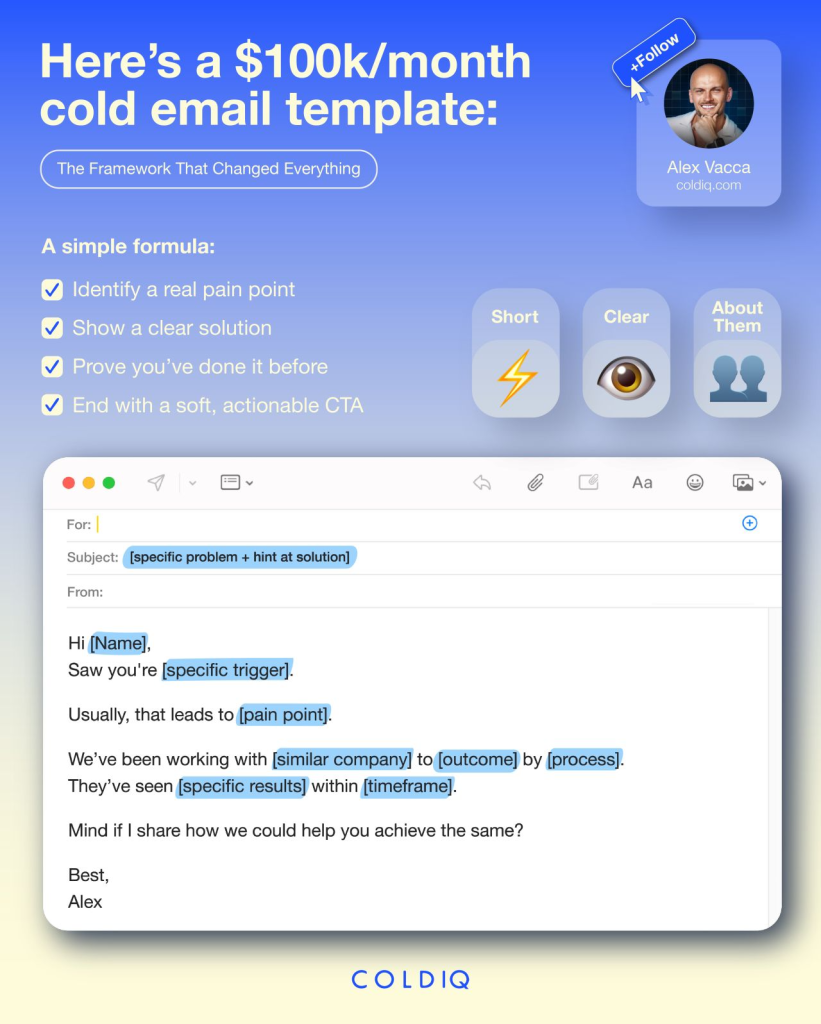
Source: Linkedin User
Here are the 3 cold email writing rules I use that consistently get replies (and yes, they’re dead simple).
1. Start With a Real Trigger
The three most effective cold email writing rules are: start with a real trigger, name a clear pain and solution, and give 100% of the value up front. Short, specific emails that feel personal—not salesy—are more likely to get replies.
Forget generic “Hope you’re doing well” openers. A cold email only works if it’s anchored in something real.
- Hiring new SDRs? Mention it.
- Just raised funding? Acknowledge it.
- Published a new case study? Reference it.
Example:
“Saw you’re hiring 3 new SDRs.”
This proves you’ve done your homework. It’s not about flattery—it’s about context.
2. Name the Pain + Solution
Once you’ve got their attention, call out the challenge that comes with the trigger. Then, show the fix.
Example: “That usually means long ramp-up times are an issue.” This works because you’re not guessing—you’re connecting the dots. You’re saying: I see what’s happening in your world, and I know where it hurts.
3. Give the Full Value (Fast)
Here’s the kicker: don’t hold back value. Share how you’ve solved the exact same pain for someone else.
Example: “We helped [X company] reduce the ramp by 50% with our onboarding system.”
Notice: no fluff, no jargon, no 5-paragraph build-up. You’re giving the prospect everything they need to decide if they care.
The Simple Cold Email Formula
When you put it together, your email looks like this:
Hi [Name],
Saw you’re [specific trigger].
Usually, that leads to [pain point].
We’ve been working with [similar company] to [outcome] by [process].
They’ve seen [specific results] within [timeframe].
Mind if I share how we could help you achieve the same?
Best,
[Your Name]
That’s it. Short, relevant, human.
Bonus Tip: Lead With Free Work
Want a guaranteed boost in replies? Offer free work. Free audits, free strategy sessions, free mockups—whatever fits your product. Why? Because free work is the best lead magnet possible. It lowers the barrier and builds instant trust.
Why These Rules Work
Cold emails fail when they:
- Sound like copy-paste templates
- Bury the value under buzzwords
- Ask for too much too soon
By following these 3 rules, you:
- Show relevance (trigger)
- Build trust (pain + solution)
- Deliver clarity (value up front)
And clarity wins inbox battles every single time.
Suggested Reads:
B2B Offer Pricing Strategies for Founders in 2025
Outbound Sales Automation: How We Booked 27 Meetings in One Month
Conclusion
Cold emailing isn’t about clever lines—it’s about showing up relevant, clear, and valuable. Follow these 3 rules, keep it human, and you’ll start seeing more replies in your inbox.
Explore more AI tools on TheAISurf to level up your outreach game.
FAQs
What’s the ideal cold email length?
Keep it under 120 words. Short emails with one clear idea get higher reply rates than long pitches.
Should I personalize every cold email?
Yes. Even a single personalized trigger (like a recent hire or funding round) increases response rates significantly.
Do cold emails still work in 2025?
Absolutely. According to HubSpot’s 2024 report, personalized emails still outperform generic blasts by 3X in reply rates.