


Stay Interviews: The Secret to Retaining Top Talent
- Interview
- October 3, 2025
- No Comments
Harsh truth? Exit interviews are too little, too late. By the time you’re asking someone why they’re leaving, they’re already halfway out the door. And the kicker? Replacing top talent can cost up to 2x their salary (SHRM, 2023). That’s like watching money walk out of your office in slow motion.
But here’s the good news: You can stop the talent drain before it starts. How? By flipping the script from exit interviews to stay interviews.
In this post, we’ll explore why stay interviews matter, the exact questions you should be asking, and how to keep your best people motivated, engaged, and loyal.
Source: Linkedin User
What Is a Stay Interview?
A stay interview is a proactive conversation between leaders and employees to understand what keeps them engaged, what challenges they face, and how the company can support their growth. Unlike exit interviews, stay interviews focus on retention, motivation, and building trust before employees consider leaving.
Why Exit Interviews Fail
- Too late in the game: By the time you get feedback, it’s useless for that person.
- Surface-level honesty: Departing employees often sugarcoat answers to avoid burning bridges.
- Zero ROI: You can’t act on it fast enough to keep them.
Instead, shift to a retention-first mindset: listen now, act now, and build a culture that makes people want to stay.
9 Simple Ways to Retain Top Talent
Want to cut turnover before it eats your profits? Start here:
- Listen to their ideas.
- Recognize efforts publicly.
- Build a positive culture.
- Invest in development.
- Offer growth, not just a paycheck.
- Give meaningful feedback.
- Protect work-life balance.
- Show appreciation daily.
- Set clear expectations.
Pro tip: A positive workplace culture isn’t a perk—it’s a retention strategy.
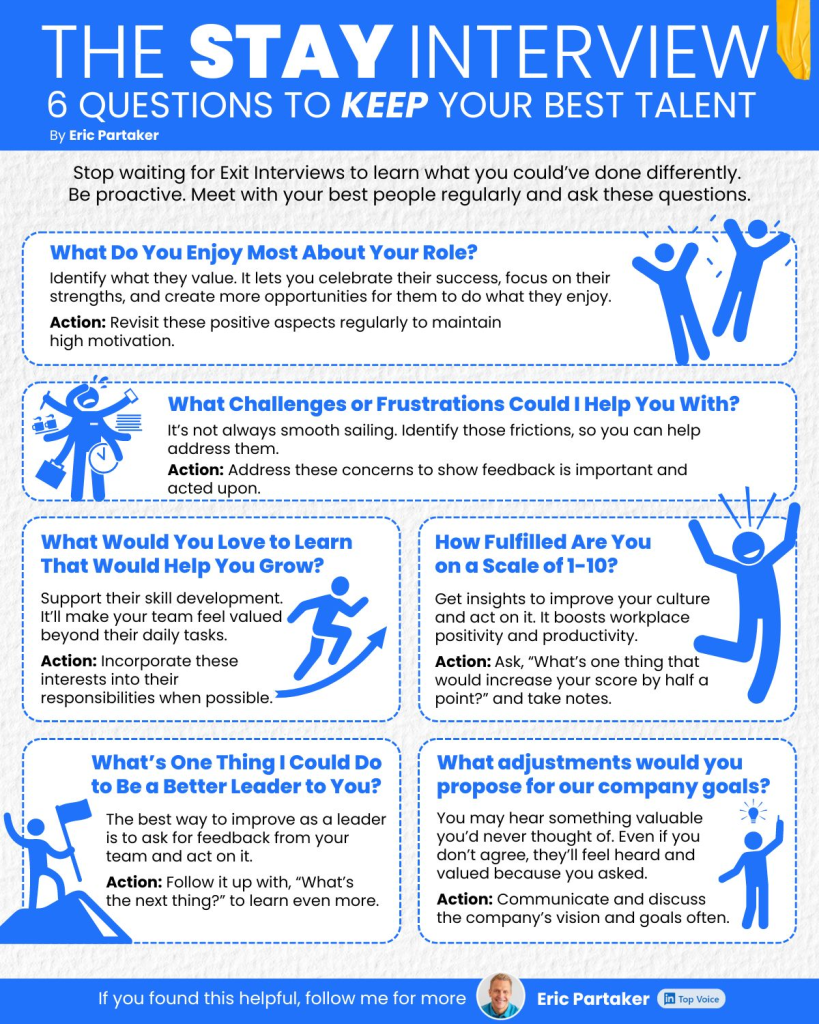
The 6 Stay Interview Questions Leaders Should Ask
1. What do you enjoy most about your role?
Spot what energizes them. Build more of it into their day.
Action: Revisit these positives often to sustain motivation.
2. What challenges or frustrations could I help you with?
Uncover daily blockers that may lead to disengagement.
Action: Act on feedback quickly to show it matters.
3. What would you love to learn that helps you grow?
Growth drives loyalty. Employees who learn, stay.
Action: Blend learning goals into their responsibilities.
4. What’s one thing I could do to be a better leader?
Leadership is a two-way street. Invite real feedback.
Action: Follow up with, “What’s the next thing?”
5. On a scale of 1–10, how fulfilled are you?
A simple metric with powerful insight.
Action: Ask, “What’s one thing that would raise your score by half a point?”
6. What adjustments would you propose for our company goals?
Big-picture alignment matters. Employees want their voice heard.
Action: Revisit company vision and communicate it clearly.
Relevant Reads:
Building Trust in Leadership: Simple Habits That Change Everything
7 Signs You Work for a Great Leader
Conclusion
Exit interviews tell you why someone left. Stay interviews tell you how to keep them. If you want to protect your culture, save money, and keep your top people thriving, start the conversation today.
Look after your team, and they’ll look after your business. Explore more AI-powered workplace insights on TheAISurf.
FAQs About Stay Interviews
Q1. How often should I conduct stay interviews?
At least twice a year, but quarterly check-ins keep conversations fresh.
Q2. Who should lead a stay interview?
Direct managers, not HR. Trust builds through relationships, not paperwork.
Q3. How long should a stay interview last?
Keep it 30–45 minutes—long enough for depth, short enough to stay practical.