


Best AI Workflow Automation Tools for 2025
- AI AI Workflow
- September 18, 2025
- No Comments
Clever systems can now manage your workflows, handling everything from sending cold emails to predicting the weather. The best part is that these aren’t just tools to save time; they also establish a degree of efficiency that individuals simply can’t achieve on their own.
Any SaaS business in 2025 that skips workflow automation is making a huge blunder. It’s like a company attempting to operate without Wi-Fi. In this guide, we’ll dive into the leading AI tools, see how they’re used in practice, and walk you through a simple, no-code process for building your first AI workflow.

What is AI Workflow Automation?
Artificial intelligence for business automation is the application of AI to manage and refine repeated business processes, such as collecting data or generating reports, without people having to step in. It integrates your various apps, analyzes data in the moment, and autonomously decides on the next step, acting as a highly intelligent and more powerful alternative to simple workflow connectors.
Automates Repetitive Tasks
Technology can take over routine work like responding to emails, updating data, or handling bills. This lets you dedicate your energy to more important and creative parts of your job.
Connects Multiple Apps Seamlessly
Programs like Gmail and Airtable can be set up to work together, so a change in one will automatically cause a change in the other. This eliminates the hassle of copying information.
Learns and Improves Over Time
Unlike a simple set of instructions, smart computer systems improve with experience and learn from the information they analyze. They can adjust to new circumstances, manage unusual problems, and even recommend better ways of working.
Reduces Human Errors
Manual workflows are prone to mistakes—think wrong numbers in invoices or missed appointment emails. AI automation minimizes those errors by following consistent logic every time.
Scales Without Extra Costs
A growing business comes with an increasing number of tasks. Automated systems powered by AI can handle thousands of actions without a larger workforce, making them an affordable option for both new and established companies.
Why 2025 is the Breakout Year for AI Workflows

2025 feels like the tipping point where AI workflows stop being “cool experiments” and start becoming everyday business essentials. The cost of AI dropped, the models got sharper, and teams finally realized that automation isn’t about replacing jobs—it’s about scaling impact.
This year, companies are making their work processes more intelligent and adaptable, almost as if a person were doing the work. A recent Gartner study found that 90% of businesses plan to spend more on automation technology this year. Advanced software can now make complex, multi-step decisions, going beyond simple, one-off tasks.
Platforms like n8n, Zapier AI, and Make.com are now easy for entrepreneurs and marketers to use without any coding.
Basically, the tech matured, the costs dropped, and adoption exploded.
Best AI Workflow Automation Use Cases in 2025
Forget the buzzwords; AI workflows are already making a tangible impact on team operations in 2025 as we have seen. These examples demonstrate how businesses can reduce costs and gain a lead on their competitors. Here are some typical real-world applications you can begin using today.
1. Cold Email Automation That Feels Human
Forget blasting 10,000 generic emails. A Boston startup is using an automated system to find potential customers and write personalized emails. The system analyzes data from LinkedIn, allowing it to identify and connect with promising leads using introductions that sound like they were written by a person.
Result: 40% reply rate, compared to the usual 5%.
2. Gmail AI Auto-Responder for Inbox Zero
Your Gmail becomes an assistant. Imagine hitting Inbox Zero without lifting a finger. This Gmail feature quickly scans new messages to grasp their meaning and sends instant, relevant responses. It typically functions as an efficient assistant who never takes a break, ensuring your inbox is handled while you focus on your work. The system is designed to read emails, compose polite replies, and also prioritize the most important ones.
No more late-night “sorry for the delay” notes.
Works perfectly for job application automation where every response counts.
3. Appointment Automation & AI Scheduling
Imagine never sending another “Does 2 pm work for you?” email again. Appointment automation tools now negotiate time zones, block double-bookings, and even reschedule on your behalf. It feels less like software and more like having a personal assistant who never sleeps. Ever played email ping-pong just to book a call? AI fixes that.
AI appointment scheduling tools sync calendars, detect time zones, and negotiate availability. A New York law firm cut scheduling time by 70% using AI-powered assistants. This isn’t just convenience—it’s a revenue unlock. Missed calls = missed deals.
4. Invoice Data Extraction & Invoice Automation
Manually typing invoice details into spreadsheets feels like a relic from the 90s. With AI invoice data extraction, every number, vendor name, and date gets pulled out in seconds—no human eyes required. Pair it with invoice automation, and your system doesn’t just read invoices, it approves, categorizes, and schedules payments before you even finish your coffee. AI turns PDFs into clean, structured data.
Invoice data extraction pulls details directly into QuickBooks or Airtable.
Invoice automation approves, categorizes, and even schedules payments.
Companies save 40 hours per month just by automating invoices.
5. AI Weather Forecasting for Business Operations
Sounds niche? It’s not. Retail, events, and also logistics run smoother when powered by AI weather forecasting.
Example: A Seattle-based delivery company cut fuel costs by typically rerouting trucks with real-time AI forecasts.
6. Printify Automation for E-commerce
Running merch stores used to be a grind. Now, with Printify automation, AI handles product listings, orders, and even design tweaks. Paired with AI image tools, your Shopify store can run on autopilot.
7. Multi-LLM Testing for Smarter Decisions
Instead of betting everything on a single AI model, multi-LLM testing lets you run the same prompt across GPT-4, Claude, Gemini, and others—then pick the winner. It’s like having a panel of experts in the room, each giving their best answer, so you never settle for “good enough.” One model isn’t enough. Multi-LLM testing lets you compare GPT-4, Claude, and Gemini side by side.
Use case: Testing sales email subject lines with three models to see which converts best.
That’s like A/B testing on steroids.
8. Image Embeddings Workflow in Knowledge Management
This is a hidden gem. By combining image embedding workflow with Obsidian or Airtable, you can tag, search, and retrieve visual data instantly. Imagine pulling up a design file just by describing “blue logo mockup with curved edges.” This changes the game for researchers, designers, and developers.
9. n8n Workflow Documentation with GPT
Documenting workflows is a pain, but with GPT, it’s literally a breeze. It generates clean Markdown documentation for n8n flows automatically, so your team has a living playbook that’s always current and easily searchable, without any messy screenshots or forgotten details.
One pain point? Documenting workflows. With n8n workflow documentation, GPT auto-generates clean docs in Markdown using Docsify.
- Perfect for dev teams who hate manual documentation.
- Saves time, reduces onboarding friction.
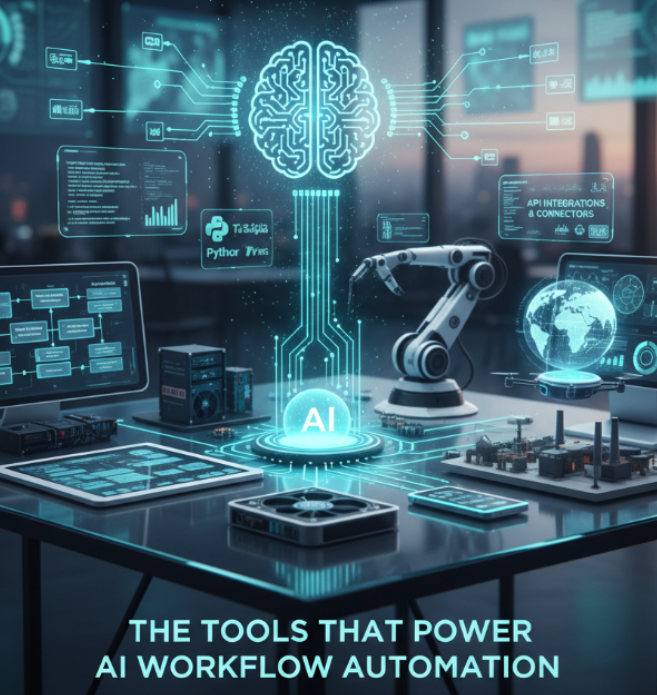
The Tools That Make AI Workflow Automation Possible
Instead of being a magical process, AI workflows are the result of powerful tools that discreetly handle the work. They are typically responsible for linking apps, reviewing data, and also making immediate decisions. Think of them as the silent, round-the-clock partners in your company.
- n8n → best for no-code automation workflows
- Zapier AI → mainstream and easy for small teams
- Make.com → flexible for complex setups
- Reclaim.ai → powerful for AI appointment scheduling
- Bardeen.ai → scrapes, summarizes, and automates data flows
- Levity → custom AI model automation without coding
72% of SMBs that adopted AI workflows in 2024 reported higher profit margins within six months. AI workflow adoption in HR grew 3x faster than in marketing. The fastest-growing use case? Job application automation, especially in competitive tech hiring.
Check out more blogs on The AI Surf website:
AI Workflow Automation in 2025: Tools, Trends & Use Cases
AI Workflow Automation and Its Business Impact
How SpeedChat.ai is Revolutionizing B2B Sales Automation
Final Thoughts: Don’t Sleep on AI Workflows
Here’s the final truth for you: businesses that adopt AI workflow automation in 2025 will outperform competitors who stick with manual systems. The goal isn’t just efficiency; it’s typically about gaining new powers. You can speed up your hiring process, improve your marketing, and even anticipate how weather might affect your business.
Ultimately, these systems can help anyone—from a busy founder to a developer with a lot of documentation—free up their schedule and have a greater effect. Start exploring the best AI workflow tools today.
FAQs About AI Workflow Automation
Q1. How does AI workflow automation save time?
AI eliminates repetitive tasks like scheduling, data entry, and email replies, freeing up to 20+ hours per week for teams.
Q2. Can AI workflows replace employees?
Not exactly. They don’t replace humans; they handle boring, repetitive stuff so humans can focus on strategy and creativity.
Q3. What’s the easiest way to start with AI workflows?
Use no-code tools like n8n or Zapier AI, start with one task (like cold email automation), then expand gradually.