


Apollo.io Platform Guide 2025: Features, Pricing, Integrations, and Real-World Use Cases
- Apollo.io
- October 4, 2025
- No Comments
Apollo.io Platform Guide 2025: your definitive resource to understand Apollo.io’s capabilities in sales intelligence, B2B lead generation, and outbound sales automation. Leveraging a powerful sales intelligence software like Apollo.io can provide a crucial edge.
Whether you’re a startup, SaaS provider, recruiter, or enterprise, this guide offers insights into its features, pricing, integrations, and practical use cases to help you make an informed decision.
Apollo.io Platform Guide 2025: Key Features and Benefits
What is Apollo.io Platform and how it works
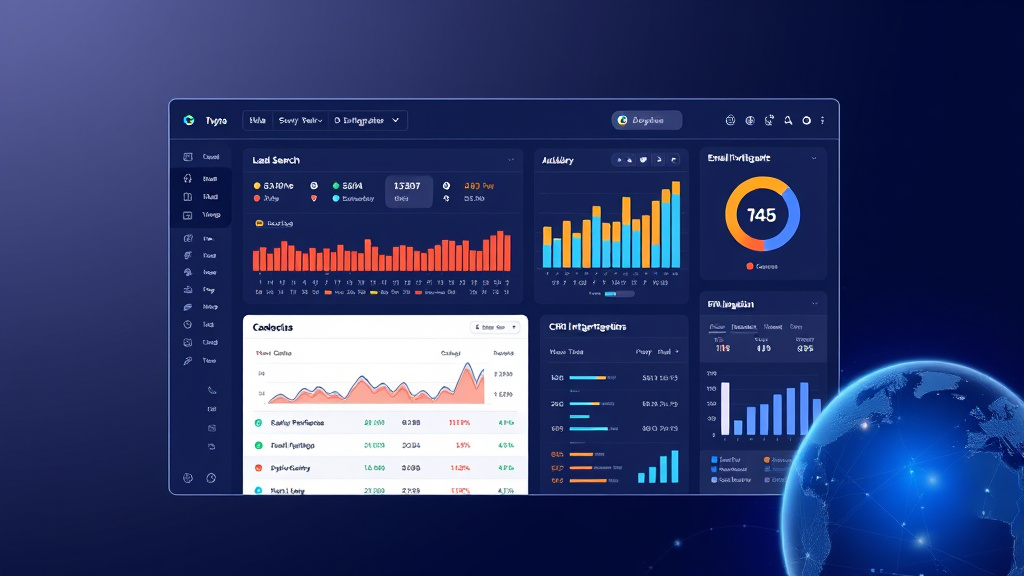
Apollo.io is a leading sales intelligence platform designed to empower sales teams, marketers, and recruiters with accurate, real-time data. The platform integrates prospecting, email verification, outreach automation, and CRM connectivity into a unified interface.
At its core, it functions as a B2B lead generation tool that simplifies the process of finding, verifying, and engaging with potential clients or candidates.
The platform’s architecture hinges on providing actionable insights through comprehensive database search, enriched profiles, and targeted prospecting filters. It automates routine outreach activities, providing a streamlined workflow that reduces manual effort while increasing conversion rates.
This makes it particularly effective for organizations that want to scale their sales efforts without sacrificing data quality or compliance standards, such as GDPR and SOC2.
Key features for sales intelligence and lead generation
One of Apollo.io’s standout features is its sales intelligence software capabilities, offering deep insights into prospects’ roles, company details, and recent news—all invaluable for crafting personalized outreach.
The platform’s prospecting filters enable users to target contacts based on industry, size, location, job title, and technographics, creating hyper-targeted lists. This assists users in APM (Account-Based Marketing) strategies, allowing for focus on high-value accounts.
Furthermore, Apollo.io Platform excels with its lead enrichment and scoring features, automatically updating and prioritizing contacts based on engagement and relevance. Its email verification platform minimizes bounce rates, ensuring your outreach hits valid addresses.
Apollo.io’s outreach automation streamlines campaigns across multiple channels, integrating seamlessly with CRM systems such as HubSpot and Salesforce. This synergy enhances lead nurturing and pipeline management, contributing to higher ROI.
Benefits of using Apollo.io for startups, SaaS, and recruiters
Startups, SaaS companies, and recruiters find immense value. For startups and SaaS providers, the platform supports rapid lead generation and detailed account views essential for early growth. Its CRM integrations allow existing pipelines to scale with new leads without disconnects, providing seamless onboarding and activity tracking.
Recruiters benefit from Apollo.io’s vast database and email verification features that ensure they reach genuine prospects quickly. Its prospecting filters and candidate sourcing tools help in identifying specialized talent efficiently.
Additionally, its affordability and flexible pricing plans make it accessible for small teams, while its robust capabilities scale for larger organizations. These benefits collectively improve outreach precision, reduce manual effort, and accelerate revenue or talent acquisition milestones.
Understanding Apollo.io Pricing Plans for 2025
Free Apollo.io Platform plan overview
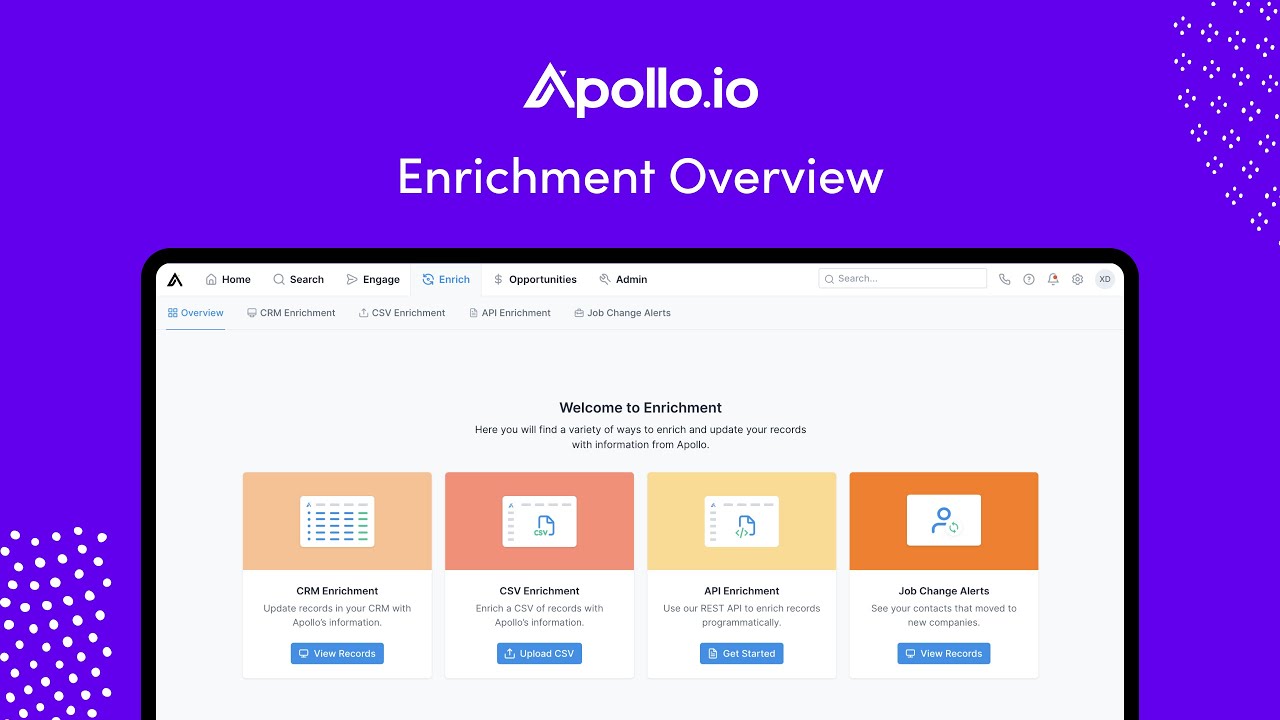
The free plan serves as an entry point for individuals or small teams looking to explore Apollo.io’s basic functionalities. It typically includes limited access to the database, basic prospecting filters, and some outreach automation capabilities.
Users can familiarize themselves with the platform’s core features such as the Apollo.io Chrome extension and email verification, making it ideal for initial testing and learning.
However, the free plan notably restricts usage caps on credits and advanced integrations. It’s mainly suited for individuals who want to gain initial insights into how Apollo.io enhances their prospecting or for startups cautiously vetting the platform before committing to paid tiers.
For sustained engagement, leveraging paid plans ensures access to more credits, detailed analytics, and higher outreach limits.
Paid plans explained
The paid Apollo.io pricing plans 2025 typically include the Starter, Professional, and Organization tiers, each designed to cater to different business needs. The Starter plan provides additional credits, expanded filtering options, and more access to the database compared to free usage. It’s excellent for small sales teams or startups focused on early lead generation.
The Professional plan is geared towards growing sales teams needing advanced Apollo.io Platform features like lead scoring, enriched data, and dedicated support. It often includes integrations with HubSpot, Salesforce, and Outreach, streamlined workflows, and automated sequences.
The Organization tier unlocks enterprise-level controls, conformity options such as GDPR compliance, SOC2 security, and customization, making it suitable for large companies with complex sales processes.
Apollo.io credits system and resets
Credits are central to Apollo.io’s model, representing a quantifiable measure of actions such as email sends, profile views, or database searches. The credits explained section helps users understand how to optimize their usage—whether to prioritize outreach or data enrichment. Credits typically reset monthly or according to your plan, encouraging strategic planning around campaigns.
Strategically, maximizing credit efficiency involves leveraging lead enrichment and scoring prioritization, ensuring you focus outreach on high-value prospects. Understanding the Apollo.io Platform credit system fosters better resource allocation, especially when expanding outreach campaigns or importing hundreds of contacts.
It’s critical for users to balance their credit consumption with campaign goals to derive maximum value from their subscription.
Which Apollo.io Platform plan is best for your business?
Choosing the right Apollo.io pricing plan hinges on your sales volume, target market, and organizational goals. Entrepreneurs and sales startups might opt for the Starter plan to validate the platform’s value. High-growth SaaS firms may opt for Professional to support larger, automated outreach campaigns. Large enterprises with complex account-based strategies benefit most from Organization plans.
Ultimately, the decision should be based on your current prospecting needs, budget, and future growth plans. For businesses just testing it’s capabilities, starting at a lower tier and scaling up as ROI becomes clear is a prudent approach. Regularly reviewing your campaign metrics and Apollo.io reviews can aid in adjusting plans for optimal outcomes.
Integrating Apollo.io with HubSpot and Salesforce
HubSpot integration benefits
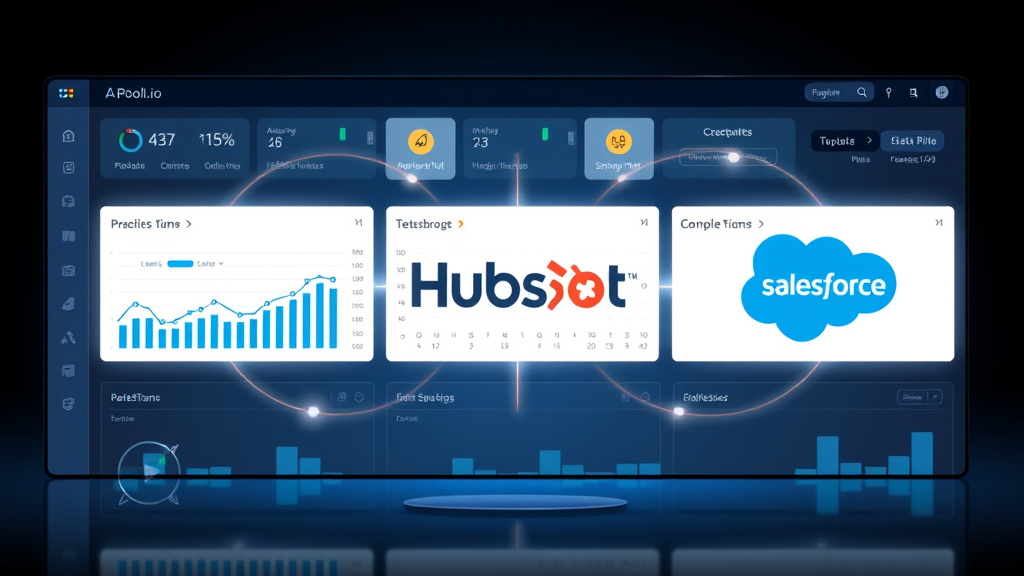
Seamless CRM integrations, like with HubSpot, are among Apollo.io’s core strengths, enabling teams to automate data synchronization, inbound/outbound Marketing, and contact management. The integrations facilitate real-time data updates, making prospecting more efficient and reducing manual data entry.
The integration benefits include automating lead import/export, tracking engagement directly within your CRM, and enriching existing contact details with Apollo.io’s data. This synergy dramatically improves productivity, accelerates sales funnels, and ensures uniform data across platforms—crucial for scaling outbound strategies and implementing account-based marketing (ABM) initiatives effectively.
Salesforce integration setup
Setting up Apollo.io Salesforce integration involves connecting your Salesforce account via OAuth, configuring synchronization preferences, and enabling specific workflow automations. Once linked, it can automatically push new prospects, update lead statuses, and log email outreach activities directly within Salesforce.
For sales teams, this integration simplifies the pipeline management process, enhances lead scoring accuracy, and provides comprehensive insights into outreach effectiveness. It minimizes data silos and ensures that your outreach efforts are aligned with your overall CRM strategy. This enables more targeted, outbound sales automation, and better orchestration of ABM campaigns.
Other integrations: Outreach, Salesloft, and more
Beyond HubSpot and Salesforce, it offers integration with platforms like Outreach, Salesloft, and other sales engagement tools. These integrations facilitate multi-channel outreach sequences, average activity tracking, and personalized messaging workflows. As a result, teams can scale their prospecting efforts while maintaining high engagement standards.
Having these Apollo.io integrations also simplifies performance analysis across different outreach campaigns, allowing tailored adjustments based on engagement metrics.
As sales tools evolve, the ability to adapt workflows seamlessly through such integrations becomes vital for maintaining competitive agility, especially for organizations employing multi-channel strategies.
Apollo.io Chrome Extension: A Comprehensive Review
How the Chrome extension works for LinkedIn and Gmail
The Apollo.io Chrome extension enhances prospecting by embedding access to Apollo’s database directly within LinkedIn, Gmail, and other browser surfaces. When browsing LinkedIn profiles or emails, users can instantly view enriched contact details, recent activity, and prospect scores, all without leaving the platform. This real-time data access streamlines lead sourcing and qualification.
The Apollo.io Platform extension also allows instant email verification, formatting, and prospect list extraction while browsing social networks or email threads. Its ease of use helps automate prospecting filters application, enabling faster sourcing and outreach. Such productivity tools are vital for teams prioritizing speed and accuracy in their outbound sales automation.
Prospecting Apollo.io Platform workflows with the extension
Users can incorporate the Chrome extension into their daily workflow by collecting contact details and enriching profiles directly while browsing LinkedIn or Gmail. It helps create targeted outreach campaigns by exporting contact data directly to Apollo.io, where further lead enrichment and scoring take place. This process reduces repetitive manual work and enhances data accuracy.
The extension effectively supports multi-stage prospecting workflows — from initial lead identification to outreach and follow-up—all within familiar platforms. It also allows for quick access to Apollo.io’s database filters, making bulk searches and batch prospecting more efficient.
Overall, it elevates productivity and enriches prospecting Apollo.io Platform strategies with minimal friction.
Pros and cons of the Chrome extension
While the Chrome extension offers remarkable convenience and speed, some limitations exist. Its reliance on browser compatibility and occasional latency issues can hinder smooth operation for extremely large datasets. Users might also find that certain features are less comprehensive than the full platform, necessitating periodic logins to the main dashboard.
Despite these drawbacks, the extension’s benefits—increased prospecting speed, immediate data enrichment, and seamless integration with Gmail/LinkedIn—outweigh the cons for most sales and marketing teams. Proper Apollo.io Platform training and strategic use ensure the extension boosts ROI without disrupting existing workflows, especially when integrated with other features.
Apollo.io vs ZoomInfo: A Comparison of Lead Generation Tools
Data coverage and accuracy
Both Apollo.io and ZoomInfo are giants in the sales intelligence software space. Apollo.io vs ZoomInfo comparison should consider data coverage, accuracy, and data freshness. Apollo.io’s strength lies in its integrated outreach capabilities combined with detailed contact data, while ZoomInfo offers extensive company insights and technographics.
Critics often cite its data accuracy compared to ZoomInfo, which holds a more comprehensive corporate database, especially in specific verticals. Nonetheless, data enrichment, especially with lead enrichment and scoring, outperforms in speed and usability, making Apollo.io Platform a more dynamic choice for SMBs and startups seeking rapid lead generation.
Pricing and Apollo.io Platform value comparison
Pricing is a critical factor when choosing between Apollo.io and ZoomInfo. The pricing plans tend to be more flexible and affordable, especially for small to mid-sized teams. ZoomInfo’s plans, typically higher, are justified by extensive data coverage and analytics tools—more suitable for large enterprises.
For organizations seeking cost-effective lead generation with integrated outreach, Apollo.io Platform offers exceptional value, combining database access with automation at a competitive price point. ZoomInfo may be more appropriate for large organizations with complex, high-volume data needs, but it often provides better usability for startups and SMBs.
Other competitors: Lusha, Clearbit, Cognism
Other popular alternatives like Lusha, Clearbit, and Cognism each have their unique strengths. Lusha excels at fast contact sourcing suitable for SMBs. Clearbit offers deep data enrichment features integrated within marketing platforms. Cognism emphasizes GDPR compliance and international data coverage.
Overall, each alternative brings its flavor to the table, but Apollo.io Platform stands out with its combination of lead generation, email verification, and outbound sales automation. Choosing the right tool depends heavily on your organization’s size, data needs, and specific compliance requirements.
Use Cases for Apollo.io: Maximizing Your Marketing Strategy

Apollo.io for startups and fundraising
Startups aiming to accelerate lead generation and investor outreach find Apollo.io invaluable. Its database enables rapid identification of decision-makers, while its automation functionalities streamline outreach sequences. Furthermore, its email verification ensures high deliverability, critical for building early traction.
Fundraising teams benefit from the ability to identify relevant prospects and craft personalized pitches, especially with prospecting filters aligned to target investor profiles. The platform’s lead enrichment and scoring helps prioritize efforts, making scaling efforts manageable and measurable for early-stage companies.
Apollo.io for recruiters and candidate sourcing
Recruiters leverage it for sourcing high-quality talent by searching for specific profiles and technographics. The platform’s extensive database provides rich candidate details, including past roles and contact info, which supports candidate sourcing at scale.
Email verification minimizes bounce rates, while integration with ATS and CRM systems allows recruiters to follow up systematically. This leads to faster placements and improved candidate engagement, essential for recruiting with precision in competitive sectors.
Apollo.io Platform for SaaS and B2B lead generation
For SaaS and B2B companies, it functions as a lead generation powerhouse—helping identify prospects fitting ideal customer profiles. Its prospecting filters enable targeting based on industry, company size, and technographics, supporting ABM initiatives.
The platform’s combination of data accuracy, automation, and integrations empowers SaaS marketers to nurture leads effectively, convert faster, and scale campaigns across channels. The result is a more predictable pipeline and higher ROI on marketing spend.
Apollo.io for enterprise ABM campaigns
Large enterprises utilize Apollo.io for account-based marketing (ABM), leveraging in-depth company insights and contact data to craft personalized campaigns. The platform’s lead enrichment and scoring ensure that teams focus on high-value accounts with the highest likelihood of conversion.
Furthermore, CRM integrations facilitate seamless operational workflows, while GDPR compliance assures data legality and security. The flexibility of Apollo.io Platform allows enterprises to manage complex, cross-channel campaigns with systematic tracking and detailed metrics, ensuring sustained engagement and growth.
How to Login to Apollo.io: A Step-by-Step Guide
Signing up for Apollo.io
Getting started with Apollo.io is straightforward. Visit the Apollo.io Platform official website, click on the login, and select the sign-up option. You can register using your email or integrate via Google or LinkedIn for faster access. During onboarding, you’ll specify your business size and objectives to tailor the experience.
For new users, creating a password and verifying your email are initial setup steps. After registration, you will gain access to your dashboard, where you can configure your preferences, connect your CRM, and start exploring the platform’s capabilities.
Apollo.io login process explained
The login process involves entering your registered credentials on the login page. For added security, two-factor authentication (2FA) might be enabled depending on your organizational policies. Once logged in, users are directed to the intuitive dashboard equipped with navigation bars for lead search, integrations, analytics, and campaigns.
Managing access rights becomes easier through team management features, ensuring secure logins for multiple users. For everyday efficiency, bookmarking the Apollo.io Chrome extension and utilizing single sign-on (SSO) options streamline daily workflows.
Dashboard walkthrough and onboarding
Upon first logging in, new users should explore the Apollo.io dashboard, which presents core tools and recent activity summaries. The onboarding workflow provides tutorials on using prospecting filters, setting up outreach sequences, and integrating with CRMs like HubSpot or Salesforce. This guided experience accelerates proficiency, allowing teams to execute their sales strategies swiftly.
As users navigate through the dashboard, understanding how to utilize features such as lead enrichment, scoring, and campaign analytics enhances overall effectiveness. Regular review of Apollo.io Platform reviews reveals ongoing improvements and features that ensure continuous value delivery.
Reviewing Apollo.io: User Experiences and Testimonials
Apollo.io reviews from G2, Capterra, and Trustpilot
Customer feedback on reviews platforms like G2, Capterra, and Trustpilot predominantly highlight ease of use, data accuracy, and excellent customer service. Users appreciate its email verification capabilities and prospecting filters for precision targeting, which significantly improve outreach efficiency.
Some reviews praise Apollo.io’s CRM integrations and automation workflows, which reduce manual effort and enable scalable sales operations. Overall, the majority of feedback emphasizes ROI enhancements, faster deal cycles, and the platform’s intuitive interface.
Positive user feedback: strengths and benefits
Many users point out the ability to streamline outbound campaigns while maintaining high data quality. The lead enrichment and scoring features make prospect prioritization straightforward, driving better engagement.
Another strength frequently mentioned is the Chrome extension, allowing prospecting on LinkedIn and Gmail without switching platforms. These capabilities collectively contribute to higher productivity, better lead targeting, and more data-driven decisions.
Common user complaints and limitations
Despite positive reviews, some users report limitations such as occasional data inaccuracies, restrictions in the free plan, and a learning curve associated with complex features. Others mention pricing concerns as their teams scale and require more credits or advanced features.
While these limitations are relatively manageable, they highlight the importance of understanding the platform’s scope and applying strategic usage. Being aware of like ZoomInfo, Lusha, or Clearbit can also help organizations optimize their lead generation investments.
Apollo.io Email Verification: Ensuring Data Accuracy
How Apollo.io verifies emails
Apollo.io email verification works through multiple validation layers, checking syntax, domain mail server existence, and MX records to confirm deliverability. The platform continuously updates its email database to reflect current contact validity, reducing the incidence of invalid addresses.
This verification process is critical because bounce rates can significantly impact sender reputation and campaign success. Real-time validation streamlines outreach, ensuring your messages reach the right contacts—boosting engagement and conversions.
Reducing bounce rates and improving deliverability
By filtering out invalid emails before outreach, it helps users maintain high deliverability rates. This translates into lower bounce rates, improved sender reputation, and greater overall inbox placement. Accurate data also influences lead scoring, enabling prioritization of prospects with active, valid contact information.
Comparison with other email verification tools consistently places Apollo.io Platform favorably due to its seamless integration within the platform. When combined with lead enrichment, this feature offers a holistic approach to data quality, which is essential for sustained outreach success.
Comparison with other email verification tools
While standalone tools are available, Apollo.io’s integrated email verification platform offers a unified experience. Its real-time validation during lead search and bulk verification capabilities saves time and ensures high-quality data without switching platforms.
Organizations seeking to minimize bounce rates and maintain GDPR compliance benefit from the compliance standards, which adhere to privacy regulations and data security protocols. Combining real-time verification with GDPR standards ensures responsible and effective outreach.
Video
Understanding Apollo.io Credits and GDPR Compliance
How the credits system works
The credits explained system in Apollo.io functions as a currency for actions such as sending emails, performing searches, and data enrichment. Depending on your plan, you’ll receive a set number of credits each month, which can be allocated according to campaign priorities.
Efficient credit management involves strategic planning—prioritizing high-value prospects, leveraging scoring features, and timing outreach for maximum impact. Monitoring credits consumed via dashboards helps optimize future campaigns and avoid unnecessary costs.
Credit usage strategies
Maximizing credits hinges on combining lead enrichment and scoring with targeted prospecting. Using filters to narrow searches ensures credits are spent on the most relevant and promising leads. Additionally, batching outreach sequences helps conserve credits, making each action more impactful.
Organizations should also educate teams on best practices and outreach automation to prevent wasteful credit consumption. Regularly reviewing campaign metrics and Apollo.io reviews helps refine strategies for ongoing success.
GDPR, SOC2, and Apollo.io compliance standards
GDPR compliance ensures that data collection and processing adhere to European privacy standards, respecting user consent and data rights. The platform also maintains SOC2 security standards, demonstrating its commitment to safeguarding customer data through rigorous controls.
These compliance features are indispensable for companies operating globally, allowing them to execute outbound strategies confidently while avoiding legal or reputation risks. Understanding Apollo.io alternatives for international data coverage depends on compliance requirements as well as data accuracy and security guarantees.
Explore More:
60 Best AI Tools for Marketing Sales (2025 Cheatsheet)
ChatGPT for Customer Support: Boosting Satisfaction and Efficiency
Conclusion
The Apollo.io Platform Guide 2025: Features, Pricing, Integrations, and Use Cases underscores its comprehensive value for modern sales, marketing, and recruiting teams. Its combination of rich data, automation, CRM integrations, and security compliance makes it a versatile sales intelligence software.
While navigating different plans and optimizing credit usage, users can significantly enhance outreach efficiency and drive scalable growth.
Comparing with Apollo.io vs ZoomInfo or other alternatives helps organizations select the best fit for their strategic objectives. As the platform evolves, staying informed about its features, user feedback, and compliance standards ensures that businesses leverage Apollo.io Platform effectively to maximize their outbound sales and marketing success.
Ready to supercharge your outreach with AI? Explore more sales and marketing tools like Apollo.io on TheAISurf.com.