


Why Your Blog Isn’t Ranking (And How to Fix It in 20 Steps)
- SEO
- September 11, 2025
- No Comments
You’ve been writing for weeks, maybe months…
Your posts are good. Friends say they’re “super helpful.” You’ve even sprinkled in some keywords here and there.
Yet Google acts like your site doesn’t exist. Here’s the thing: top-ranking blogs aren’t just well-written.
They’re engineered — from title to table of contents — to make Google happy and keep readers hooked.
We analyzed hundreds of high-performing posts. Then, we reverse-engineered them into a 20-step checklist we use inside our client systems to consistently scale SEO traffic. This isn’t a theory.
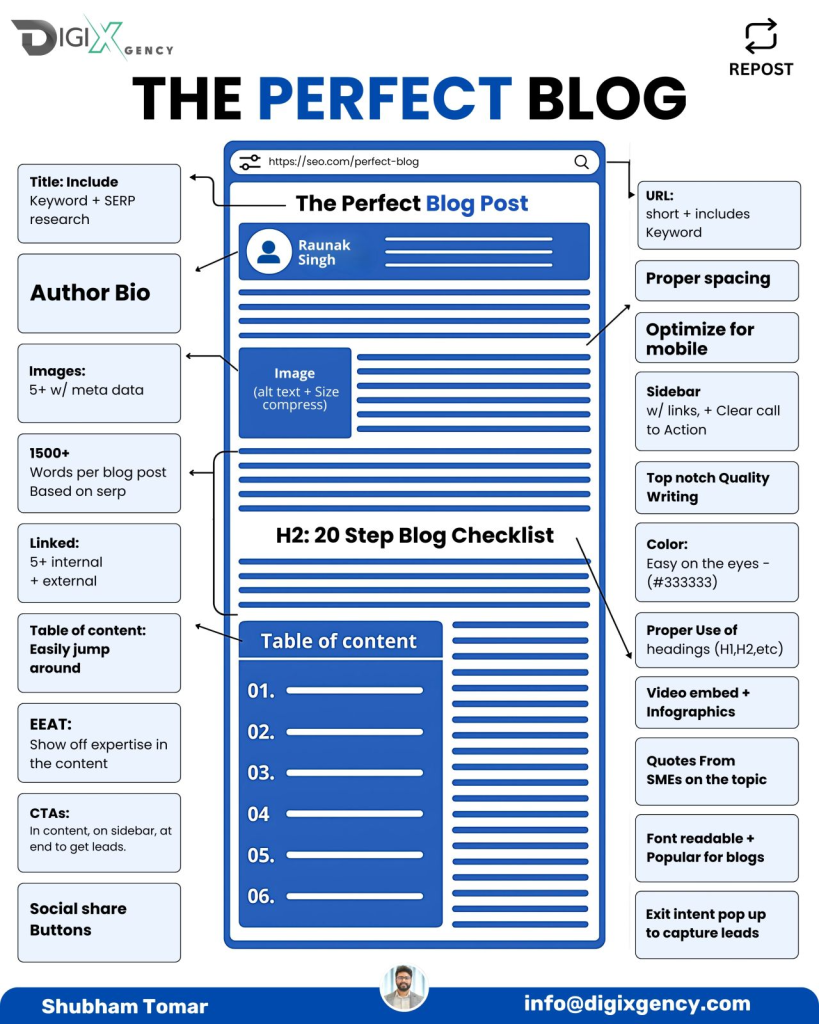
Credit: Linkedin User
The 20-Step Blog Ranking Checklist
A proven method for crafting blog content that not only ranks high in search results but also keeps readers engaged and turns them into customers.
1. SEO-Optimized Title
- Under 60 characters
- Primary keyword upfront
- Matches search intent
2. Keyword-Rich URL
- Short & descriptive
- Includes main keyword
3. Compelling Meta Description
- 150–155 characters
- Natural keyword use
- Click-enticing language
4. Author Bio
- Build trust with credentials
- Link to more of your work
5. Strategic Word Count
- 1,500+ words (based on SERP averages)
6. Visual Elements
- At least 5 images or infographics
- Alt text includes keywords
- Optimized file sizes
7. EEAT Principles
- Show Expertise, Experience, Authority, Trust through examples, case studies, and citations
8. Mobile Optimization
- Responsive design
- Test loading speed
9. Sidebar with CTAs
- Lead magnets
- Related article links
10. Table of Contents
- Clickable jump links to each section
11. Headings Hierarchy
- Proper use of H1 → H2 → H3
12. Video or Infographic Embeds
- Increases dwell time & shareability
13. Quotes from SMEs
- Adds authority & credibility
14. Readable Font & Color
- #333333 text on white background
- Sans-serif font
15. Social Share Buttons
- Easy one-click sharing
16. Exit-Intent Pop-Up
- Capture emails before visitors leave
17. Clear CTAs in Content
- At the end of major sections
18. Proper Spacing
- Short paragraphs & bullet points
19. Consistent Updates
- Refresh stats & examples regularly
Example of the Checklist in Action
When we applied these 20 steps to a client’s content, their blog:
- Jumped from page 4 to page 1 for 12 keywords
- Increased organic clicks by 340% in 6 months
- Hit 1.18M+ impressions in under a year
Suggested Reads:
Conclusion
If your blog isn’t ranking, it’s not just about “writing better.” It’s about writing strategically. This 20-step checklist gives you a proven, repeatable structure for every post — so you can climb the SERPs and keep readers engaged. Explore more AI tools and SEO strategies at TheAISurf.
FAQs
1. How long does it take to see ranking improvements?
Results from optimization efforts usually become noticeable within three to six months, though this can vary based on your level of competition and the existing authority of your domain.
2. Can short blog posts rank well?
Yes — but only if they exactly match search intent and beat competitors in quality. Longer content still wins most competitive keywords.
3. Do I need to optimize old blog posts?
Absolutely. Updating old posts with current SEO best practices can boost rankings faster than publishing new ones.