


Understanding Your Emotions: When Feelings Combine
- emotions
- October 4, 2025
- No Comments
I used to suck at emotional intelligence. Seriously. Feelings felt confusing, arbitrary, and even a little scary. Then one day, a Big hit me: I’d never really learned what emotions mean. Even in psych classes, nobody broke it down clearly.
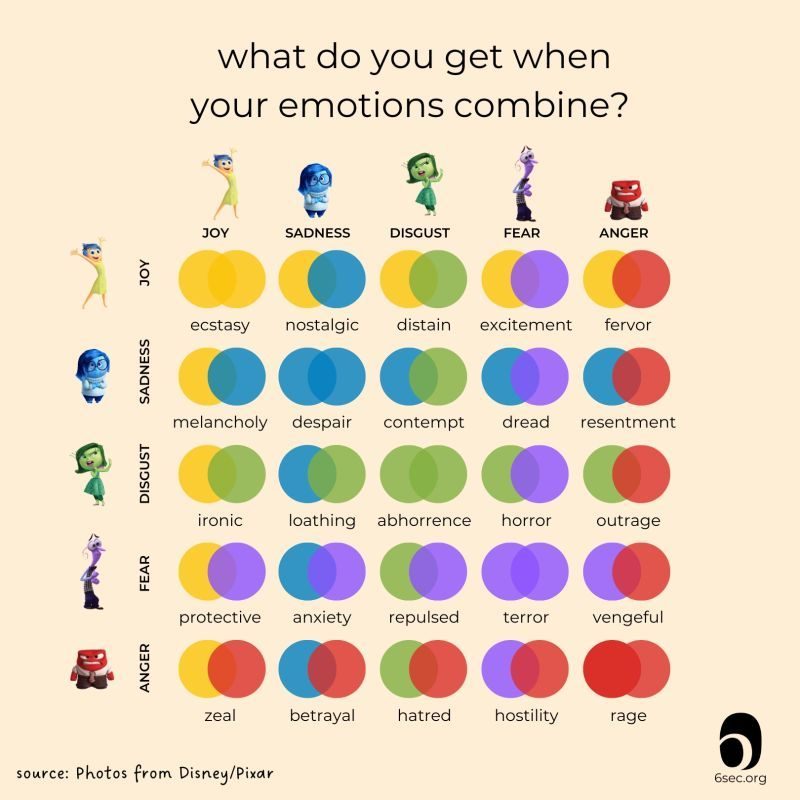
Over 27 years of reading neuroscience and studying theories of emotions, I’ve learned that feelings aren’t just random—they layer up, they combine, and we can decode them into meaningful components.
Source: Linkedin User
How Emotions Combine
Emotions aren’t single, isolated events. In complex situations, we rarely feel just one thing. Instead, feelings layer on top of each other. Imagine you’re watching a sad movie while remembering a happy childhood memory—nostalgia and melancholy can coexist, each with a distinct message.
When emotions combine, they create a complex mixture that can be decoded into basic components like joy, sadness, fear, anger, and disgust, each carrying a specific meaning. Understanding this layering helps improve emotional intelligence and decision-making.
The Core Emotions You’ll Recognize
Psychologists and theorists often identify these basic emotions that form the foundation of more complex feelings:
- Sadness: melancholy, despair, nostalgic
- Disgust: loathing, abhorrence, disdain
- Fear: dread, anxiety, horror
- Anger: rage, vengeful, hostility
- Joy/Excitement: ecstasy, zeal, fervor
When these core emotions combine, you might feel nostalgic sadness, anxious excitement, or even fervent anger. Each combination tells you something unique about your inner world.
Why Understanding Emotional Layers Matters
- Better self-awareness: Knowing what you feel helps you respond instead of react.
- Improved relationships: Recognizing layered emotions in others reduces miscommunication.
- Decision-making clarity: Complex feelings often influence choices—decoding them prevents rash decisions.
I experimented with this idea while helping Patty Freedman & Charlotte McNamara for Six Seconds’ Instagram, designing an image that showed how emotions can vary in strength and meaning. Words like “nostalgic” had more joy, while “melancholy” had more sadness, showing the nuanced interplay of feelings.
Suggested Reads:
7 Mindset Traps That Cause Burnout (and How to Escape)
Ikigai: Finding Your Reason for Being
Conclusion
Understanding that emotions combine and layer is key to building emotional intelligence. It transforms feelings from something scary and confusing into a map of your inner world. Next time you feel a mix of joy, fear, or nostalgia, remember: your emotions are speaking in layers.
Explore more AI tools on TheAISurf to uncover insights about human behavior, self-awareness, and data-driven emotional analysis
FAQs About Combined Emotions
Q1: Can one emotion cancel out another?
No. Emotions layer rather than cancel out. Feeling sad about a loss doesn’t erase moments of joy; they coexist and inform your response.
Q2: How do I decode my mixed emotions?
Start by identifying the basic components (sadness, joy, fear, anger, disgust) and notice which one is strongest in a situation. Journaling can help track patterns over time.
Q3: Does emotional complexity change with age?
Yes. As we experience more life events, we can recognize and name subtle emotions more accurately, improving emotional intelligence.