


AI Document Tools – AI PDF Assistants Transforming Information Management
- AI Tools directory
- October 12, 2025
- No Comments
In the digital age, managing extensive documentation efficiently and accurately has become more crucial than ever. This necessity has catalyzed the rapid development of AI document tools, AI PDF assistants, revolutionizing how individuals and organizations approach document interaction and analysis.
These AI document tools leverage advanced algorithms to automate, optimize, and personalize the way users access, understand, and utilize textual data, considerably reducing manual effort while boosting productivity and insight extraction. As a result, they are rapidly becoming indispensable in academic, business, and professional contexts. Discover how the latest AI tools platform is revolutionizing how we read, edit, and manage PDFs.
The landscape of document processing is experiencing unprecedented growth driven by AI innovations, making tasks that once belonged solely to human effort now accessible through intelligent automation. From natural language understanding to contextual analysis and real-time collaboration, AI document tools encapsulate a spectrum of functionalities that cater to diverse needs.
This comprehensive article explores how AI document tools platforms like ChatDOC and ScholarAI are transforming document interaction, alongside the expanding role of AI PDF assistants, discussing their features, benefits, challenges, and future potential.
The Rise of AI Document Tools – A Comparative Analysis

The rise of AI document tools, AI PDF assistants marks a significant turning point in how we process and interpret textual data. These tools harness machine learning, natural language processing (NLP), and deep learning to automate complex tasks such as summarization, extraction, translation, and even reasoning. The comparative AI document tools analysis reveals that while many of these tools share core functionalities, each has distinctive strengths tailored to specific audiences—be it academia, corporate environments, or content creators.
For instance, ChatDOC specializes in facilitating conversational interactions with documents, mimicking human-like understanding to answer queries instantaneously. Conversely, ScholarAI is oriented towards academic purposes, helping researchers locate, analyze, and synthesize scholarly articles rapidly. AI PDF assistants often serve as versatile plugins or standalone applications designed to handle a broad spectrum of PDF document tasks, from read-only inquiries to editable content management.
This divergence underscores the importance of choosing the right AI document tools based on specific workflows and use cases, yet all contribute to a more seamless, intelligent engagement with textual data.
ChatDOC and ScholarAI – Revolutionizing Document Interaction with AI
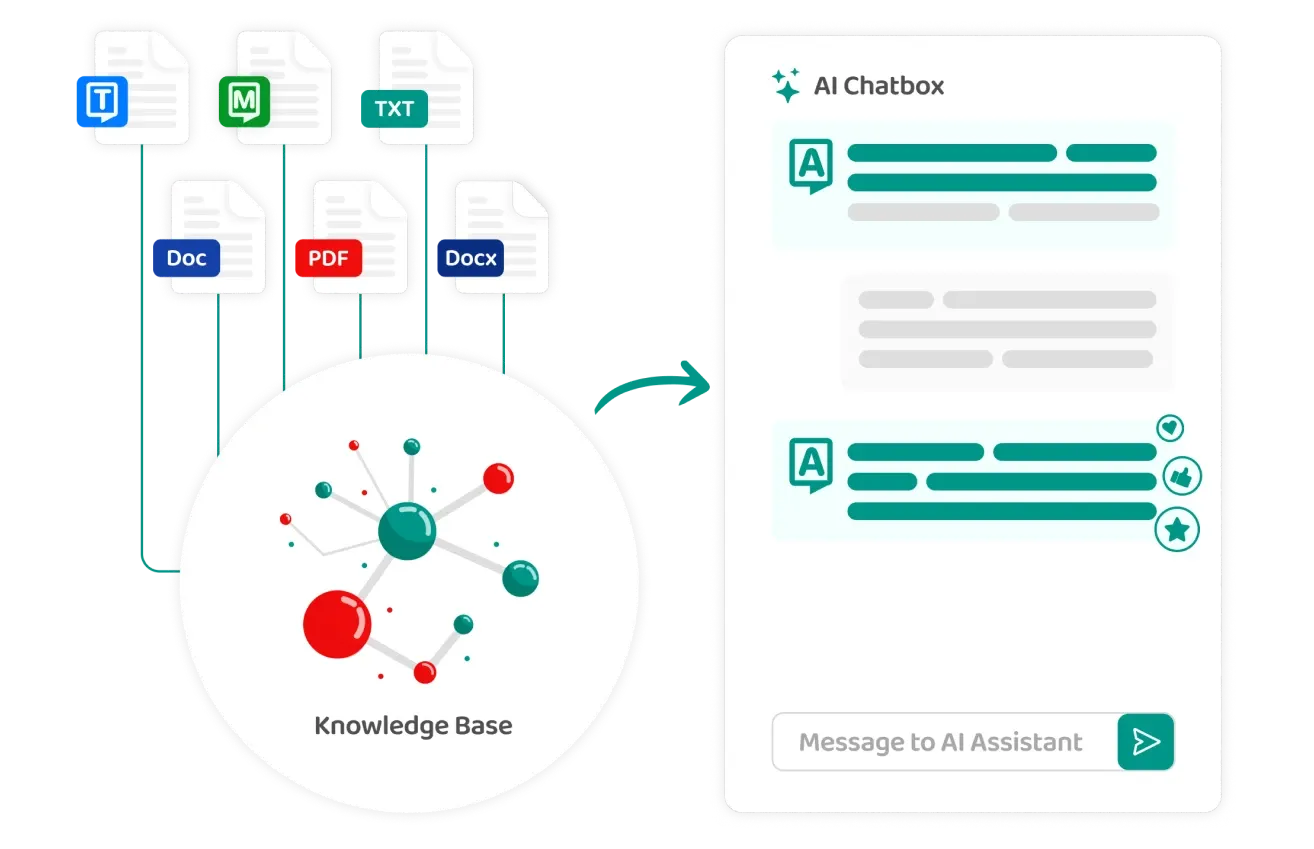
ChatDOC and ScholarAI exemplify how AI is rewriting the rules of document interaction by making information retrieval more accessible and context-aware. ChatDOC offers a conversational AI experience, allowing users to “chat” with their documents, ask questions, request summaries, or clarify complex sections, much like chatting with an expert. This AI document tools approach breaks down barriers that traditional search and navigation methods impose, especially for lengthy or complex documents. It fosters a dynamic, interactive process that enhances comprehension and decision-making.
ScholarAI, on the other hand, is tailored explicitly for academia and research environments. It accelerates scholarly work by providing fast, accurate insights into academic articles, extracting key findings, citations, and relevant data points.
This AI document tools platform not only saves researchers countless hours but also minimizes bias and oversight that can occur during manual review. Both tools demonstrate how AI document tools are shifting from passive repositories to active, intelligent partners in knowledge extraction, empowering users to engage more deeply and efficiently with source material in ways previously unimaginable.
AI PDF Assistants – Enhancing Productivity and Research Efficiency
AI PDF assistants have emerged as vital aides in managing PDF documents, which remain the predominant format for formal information sharing. These AI document tools streamline workflows by offering functionalities such as text extraction, annotation, auto-summarization, and even conversion to other formats, all powered by AI.
These assistants significantly reduce the time spent on tedious manual tasks like locating specific information or cross-referencing data across multiple documents, thus free users to focus on higher-value activities like analysis and synthesis. Discover how AI PDF Assistants listed in the Best AI Directory can supercharge your productivity and streamline your research workflow.
Moreover, AI PDF assistants are improving research efficiency by integrating features such as intelligent search, context-aware comprehension, and collaborative tools that facilitate teamwork on shared documents. For students, academics, and professionals, this means less time spent on data curation and more on critical thinking and innovation.
As these AI document tools assistants evolve, their ability to handle complex document structures, embedded multimedia, and real-time collaborative editing will further deepen their impact in both educational and enterprise sectors, creating a more interconnected, intelligent document ecosystem.
Unlocking Insights – How AI Transforms Document Understanding
The transformative power of AI in document understanding lies in its ability to analyze and interpret large volumes of unstructured data swiftly and accurately. Traditional methods relied heavily on human comprehension and manual sifting through information, often prone to fatigue and error. AI models, especially those advanced in NLP, can discern nuanced meaning, detect sentiments, and identify relationships within text, unlocking insights that were previously difficult or impossible to obtain efficiently.
These technological advances support various applications — from summarizing lengthy reports to extracting actionable data from complex legal, financial, or scientific documents. The iterative deep learning processes enable continuous improvement, making AI tools increasingly adept at understanding domain-specific language.
This AI document tools evolution empowers not just organizations but individual users to make informed decisions faster. As AI continues to evolve, its capacity to capture latent context and provide predictive insights will redefine the essence of document comprehension and knowledge discovery.
A Deep Dive into ChatDOC – Features, Benefits, and Use Cases
ChatDOC features an intuitive interface that combines conversational AI with deep document understanding, allowing users to interact naturally with complex texts. Its underlying technology enables instant question-answering, contextual summarization, and personalized document navigation, making it an invaluable tool for busy professionals, students, and researchers alike. Its ability to engage in multi-turn dialogues allows for in-depth exploration of the document’s content, facilitating comprehensive understanding without the need to read every line.
The benefits of ChatDOC extend beyond mere convenience. Its real-time interaction significantly enhances clarity and knowledge retention, especially when dealing with technical or dense material. Use cases range from legal professionals analyzing contracts, educators crafting lesson plans, to project managers reviewing lengthy reports. Its capability to adapt to specific user queries and offer tailored responses makes it a versatile and practical application of AI document tools. As it evolves, integration with other platforms and increased multi-language support will further bolster its prominence in various sectors.
Want to claim your business on our AI directory and boost visibility among top AI tools? Discover how our AI business listing platform can help you reach more users effortlessly.
ScholarAI – Accelerating Academic Research with AI-Powered Document Analysis
ScholarAI epitomizes the convergence of AI and academia by transforming how scholars access and interpret research material. It offers sophisticated tools for analyzing vast quantities of scholarly articles, extracting core themes, trends, and citations, thus enabling researchers to maintain a competitive edge. Its capabilities extend to generating summaries, suggesting relevant literature, and even predicting future research directions based on current trends.
One of the most compelling aspects of ScholarAI is its potential to democratize access to academic knowledge, breaking down barriers posed by paywalls, obscure terminology, or language limitations. The platform accelerates hypothesis generation and literature reviews, reducing the typical months-long process to mere days or hours. As academic disciplines become increasingly data-driven, AI document tools like ScholarAI will revolutionize how knowledge is disseminated, absorbed, and built upon by scholars worldwide, pushing the boundaries of scientific progress.
Choosing the Right AI Document Tool – A Practical Guide
Selecting the most suitable AI document tool requires understanding your specific needs, workflow, and technical environment. It’s essential to evaluate factors such as compatibility with existing software, ease of use, accuracy, customization options, and scalability. For example, a researcher processing millions of scholarly articles might prioritize advanced analytical features, whereas a business professional might need seamless integration with productivity suites like Microsoft Office or Google Workspace.
Moreover, considering data privacy, security, and compliance is crucial, especially when handling sensitive or confidential information. Testing trial versions and reading user reviews can provide real-world insights into reliability and customer support. As these tools vary in their core functionalities—some focusing on conversational interaction, others on bulk processing—it’s vital to match the features with your specific context. Making an informed choice will maximize your efficiency and ensure long-term value from your investment in AI document tools.
The Future of Document Processing – Exploring the Potential of AI
The future of AI document processing promises an era where machines not only interpret but also create and innovate around textual data. Advances in multimodal AI, combining text with images, audio, and video, will enable richer, more interactive document experiences. As intelligent agents become more context-aware, they will anticipate user needs, providing proactive insights and suggestions tailored to individual goals and preferences.
Furthermore, as deep learning models become more transparent and explainable, ethical concerns surrounding bias and decision accountability will diminish. We are likely to see AI tools embedded directly into the core of organizational knowledge management systems, making document handling more intuitive and autonomous. This evolution will foster new paradigms of collaboration, learning, and innovation—bridging the gap between human creativity and machine intelligence—transforming the very fabric of how information is accessed, understood, and used worldwide.
Beyond Search – How AI Assistants are Changing the Way We Interact with Documents
Artificial Intelligence is shifting the paradigm from traditional search to dynamic interaction with documents. Instead of manual querying or document navigation, AI assistants enable conversational, contextual engagement that makes retrieving specific information more natural and efficient. This evolution means users can pose complex, layered questions and receive comprehensive, precise answers instantly, mirroring human-like comprehension.
Such capabilities are revolutionizing workflows across sectors, from legal research and medical diagnostics to journalism and education. AI assistants are not merely search engines but intelligent collaborators, capable of summarizing, analyzing, and even generating content based on user prompts. This trend signals a future where our relationship with documents is more intuitive, fluid, and integrated — transforming static repositories into active, intelligent partners in knowledge creation and decision-making.
Ethical Considerations in the Use of AI Document Tools
As AI document tools become more pervasive, ethical considerations related to privacy, bias, and accountability come to the forefront. These tools often process sensitive, confidential, or proprietary data, raising concerns about data security and misuse. Ensuring transparent data handling policies and robust encryption are essential to safeguarding user information and maintaining trust.
Bias in AI algorithms poses another significant challenge, as models trained on biased data can inadvertently perpetuate stereotypes or distort information. Developers and users must remain vigilant, implement fairness audits, and continuously improve models to minimize adverse impacts. Additionally, ethical use mandates clarity around AI-generated content, avoiding misinformation and ensuring that outputs are appropriately contextualized. Addressing these ethical issues responsibly will be key to fostering sustainable and equitable advancements in AI document technology, ultimately ensuring that these innovations serve humanity positively and ethically.
Relevant Reads:
AI Tools Directory: Guide to Top Artificial Intelligence Solutions
AI Resume Builders — Cutting-Edge AI Career Tools
Conclusion
The ongoing advancement of AI document tools, AI PDF assistants signifies a transformative shift in how we engage with digital information, blending automation, intelligence, and interactivity to elevate productivity and insight. Whether through conversational interaction, accelerated research, or intelligent document management, these tools are redefining standards across academia, industry, and everyday life.
As future developments promise even more sophisticated capabilities—ranging from multimodal understanding to ethical AI stewardship—the landscape of document processing is poised for groundbreaking evolution. Embracing these innovations thoughtfully will unlock unprecedented potential for knowledge discovery, decision-making, and collaboration, shaping a more efficient, informed, and interconnected world.