



Best AI Image to Video Generator Tools: Create Cinematic Videos from Your Photos
- Video & Animation Video Generators
- November 3, 2025
- No Comments
In early January 2026, a small indie creator in Austin uploaded a single photo of a city skyline to a social media platform.
Within hours, using an AI image to video generator, the static image transformed into a 10-second cinematic video, complete with moving clouds, dynamic lighting, and ambient city sounds.
That one post went viral, reaching over a million users overnight.
The tool?
An AI image-to-video generator.
The lesson?
AI video from images isn’t just for Hollywood studios anymore, it’s for anyone with a creative idea and a still image.
The rise of AI image to video creation is changing content creation.
Social media, marketing campaigns, educational videos, and storytelling are all being revolutionized.
If you’re a creator, marketer, filmmaker, or educator, understanding these tools isn’t optional anymore, it’s essential.
This guide dives into the best AI image to video generators of 2026, their features, real-world use cases, and future trends.
By the end, you’ll know exactly which AI image-to-video tools fit your workflow and how to turn static images into stunning videos effortlessly.
Why AI Image to Video Tools Are Exploding in 2026
The demand for visual content keeps growing.
According to recent reports, video content accounts for over 80% of internet traffic in 2026, and users engage with videos far longer than static images.
Enter AI video from images.
These tools allow creators to:
- Animate still photos in seconds.
- Generate cinematic sequences with AI-controlled motion.
- Add audio, voiceovers, or sound effects automatically.
- Produce marketing-ready content without expensive video studios.
Creators no longer need multi-camera setups or motion graphics expertise.
With AI image to video creation, anyone can produce professional-grade videos from photos.
The market has responded too.
From indie developers to Google and Runway, AI video generation tools are integrating features like real-time rendering, 4K output, and multi-image reference support.
What is AI Image to Video Generator Tools?
AI image-to-video generators use deep learning to analyze image elements such as faces, backgrounds, and movement potential, generating realistic motion frames automatically.
They are ideal for creators, marketers, and educators who want to produce videos without recording footage manually.
Benefits of Using AI Image to Video Generator Tools
AI image-to-video tools save hours of manual editing, allowing users to create professional-quality videos from single images.
They help increase engagement rates, enhance storytelling, and make content creation more accessible to non-designers.
With realistic motion synthesis and customizable animation styles, they’re valuable for marketing campaigns, social media, and educational media.
How We Picked These Tools
- Accuracy and realism in generated video motion
- Speed and processing time for conversions
- Range of supported input formats and resolutions
- AI model sophistication (GAN, diffusion, or motion synthesis)
- Customization options like style, duration, and effects
- Pricing transparency and free plan availability
Top AI Image to Video Generator Tools in 2026
Here’s a carefully curated list of the best AI image-to-video tools this year.
These are optimized for different needs, social media, filmmaking, marketing, and educational content.
Pika Labs
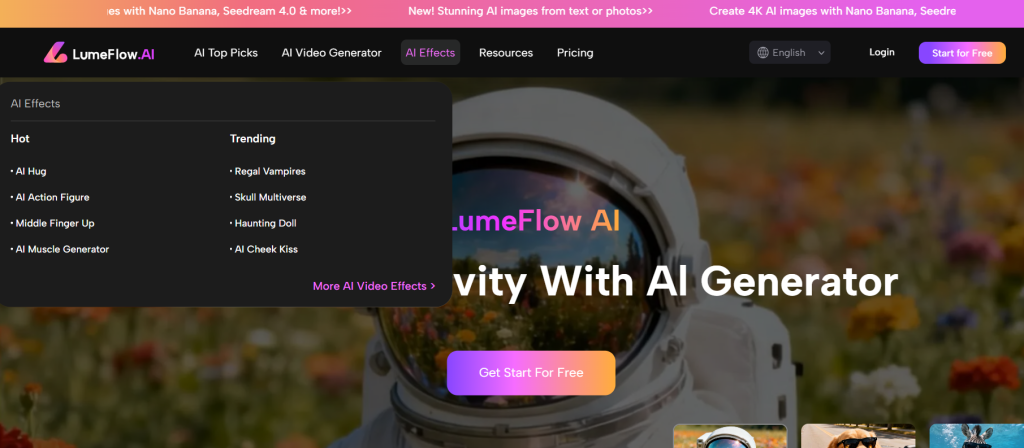
Best for realistic AI motion generation from images
What it is: Pika Labs is a leading AI video platform that converts images into cinematic motion videos using diffusion models.
Standout features:
- Text-to-video and image-to-video support
- Realistic animation and camera motion effects
- Cloud-based rendering with fast export
Pricing: Free plan available; Pro from $10/month
Best for: Content creators and filmmakers
Pros: - Natural motion realism
- Easy-to-use interface
- Supports 16:9 and vertical formats
Cons: - Limited editing control
- Requires good input image quality
Kaiber
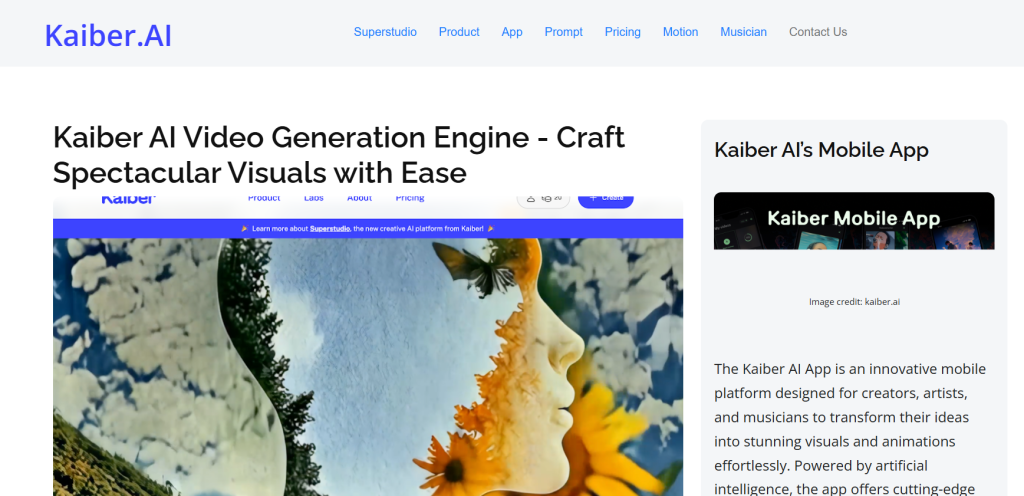
Best for artistic and cinematic image animations
What it is: Kaiber transforms images or prompts into creative videos using AI-driven scene generation and camera motion control.
Standout features:
- Multiple visual styles and transitions
- Music integration with Kaiber Soundtrack
- Custom duration and aspect ratio
Pricing: Free trial; Paid from $5/month
Best for: Musicians, digital artists, and storytellers
Pros: - Artistic flexibility
- Fast rendering
- Good for social media clips
Cons: - Motion not always consistent
- Free version has watermark
Runway ML
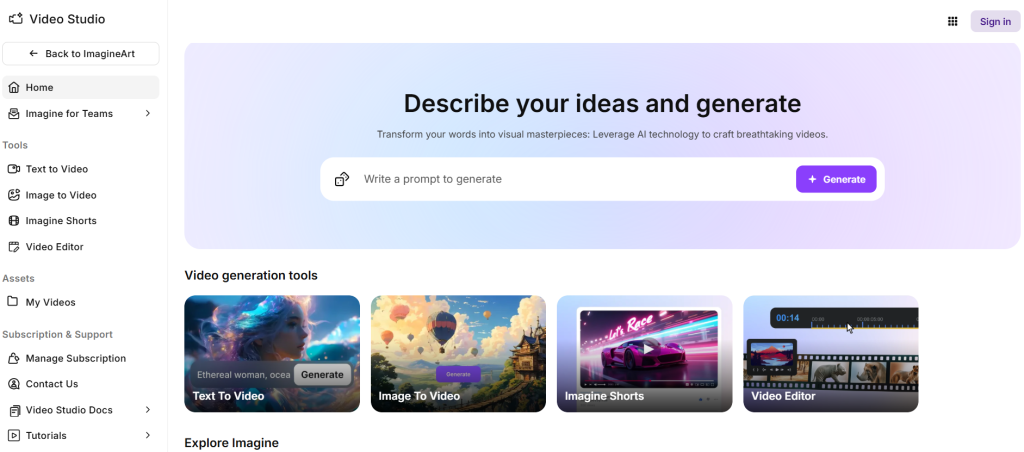
Best for advanced creators and professional workflows
What it is: Runway ML is a creative AI suite offering video generation, editing, and compositing tools powered by Gen-2 models.
Standout features:
- Image-to-video, text-to-video, and inpainting
- Real-time preview and motion tracking
- Team collaboration features
Pricing: Starter free; Standard from $15/month
Best for: Video professionals and agencies
Pros: - Studio-grade results
- Integrated AI editing tools
Cons: - High GPU usage
- Learning curve for beginners
Synthesia
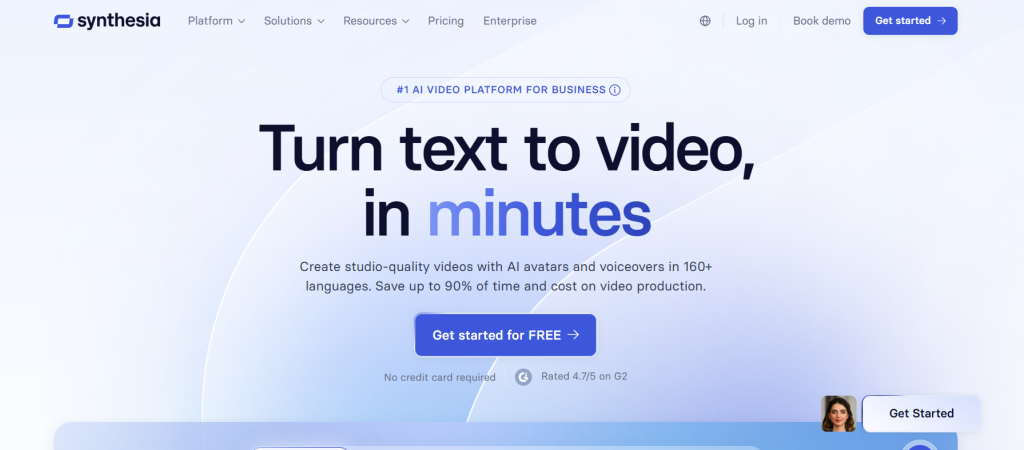
Best for AI avatar and video narration from images
What it is: Synthesia lets users generate videos from images or text using realistic avatars and voice synthesis.
Standout features:
- 150+ avatars and 120+ languages
- Image upload with voice and animation sync
- Template-based workflows
Pricing: From $29/month
Best for: Business presentations and training videos
Pros: - Professional video output
- Easy corporate use
Cons: - Limited creative animation
- Subscription required
DeepMotion
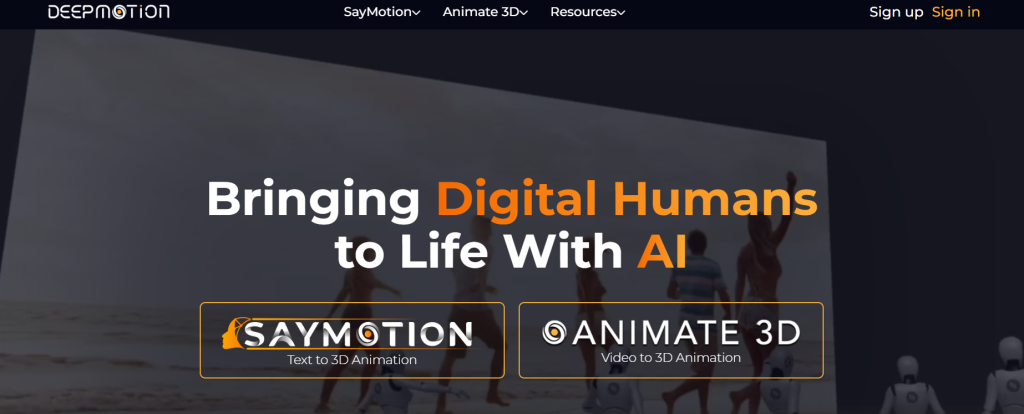
Best for character animation and 3D motion from images
What it is: DeepMotion is a motion capture and animation platform that converts images or static characters into animated 3D movement.
Standout features:
- AI motion capture from 2D inputs
- Pose tracking and realistic physics
- Exports to Unity, Blender, and Unreal Engine
Pricing: Free plan; Premium from $19/month
Best for: Game developers and animators
Pros: - Accurate 3D motion
- Ideal for interactive media
Cons: - Requires technical setup
- Limited video export length
D-ID
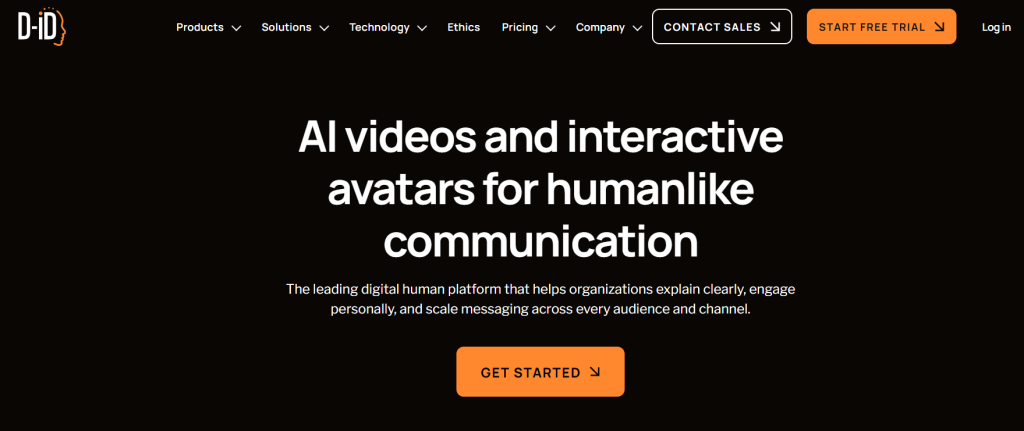
Best for talking head videos generated from portraits
What it is: D-ID converts photos into talking videos using advanced face animation and voice synthesis models.
Standout features:
- Realistic face motion from static images
- Voice cloning and script-based narration
- Web-based interface with instant preview
Pricing: Free trial; Pro from $5.99/month
Best for: Educators, marketers, and AI influencers
Pros: - High realism in facial motion
- Fast processing
- Supports multilingual output
Cons: - Limited body animation
- Subscription-based
Sora AI (OpenAI)
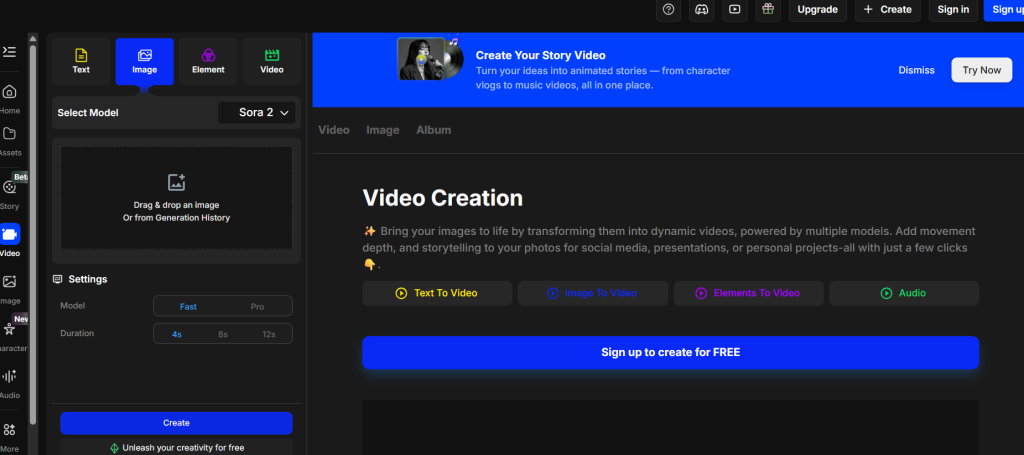
Best for text and image-based cinematic video generation
What it is: Sora is OpenAI’s upcoming AI video model that creates complex, realistic videos from images and text prompts.
Standout features:
- Ultra-realistic frame generation
- Dynamic camera movements
- High-resolution outputs up to 1080p
Pricing: See site for latest pricing
Best for: Filmmakers and AI researchers
Pros: - State-of-the-art realism
- Detailed scene interpretation
Cons: - Still in limited access phase
- High hardware requirements
Veo3 JSON Prompt
Best for structured, script-driven image-to-video creation
What it is: Veo3 JSON Prompt offers a unique framework for generating videos using JSON prompt templates for granular control.
Standout features:
- JSON-based configuration for precise motion
- Extensive prompt library and analysis tools
- Supports cinematic and artistic scenes
Pricing: See site for latest pricing
Best for: Technical creators and developers
Pros: - Full creative control
- Supports 4K outputs
Cons: - Requires prompt knowledge
- Complex setup for beginners
Filtrix AI
Best for stylized image-to-video effects
What it is: Filtrix AI specializes in transforming images into animated art-style videos using AI filters.
Standout features:
- Artistic motion filters
- High-resolution rendering
- Customizable animation presets
Pricing: From $4.99/month
Best for: Designers and social creators
Pros: - Great visual variety
- Simple interface
Cons: - Not suited for realistic videos
- Limited sound support
Comparison Table
| Tool | Key Use Case | Starts At | Free Plan | Standout Feature |
| Pika Labs | Cinematic AI motion videos | $10/month | Yes | Realistic motion synthesis |
| Kaiber | Artistic animations | $5/month | Trial | Creative camera effects |
| Runway ML | Professional AI video editing | $15/month | Yes | Gen-2 video engine |
| Synthesia | Talking videos with avatars | $29/month | No | 150+ avatars & voices |
| DeepMotion | 3D character animation | $19/month | Yes | Motion capture accuracy |
| D-ID | Talking portraits | $5.99/month | Trial | Realistic facial animation |
| Sora AI | Cinematic realism | TBD | No | Next-gen AI model |
| Veo3 JSON Prompt | Technical video creation | Custom | No | JSON-based control |
| CrePal AI | Short-form social videos | Free | Yes | Viral AI video agent |
| Filtrix AI | Artistic video filters | $4.99/month | No | Stylized motion effects |
How to Choose the Right AI Image to Video Generator
- For cinematic or storytelling videos, choose Pika Labs or Sora AI.
- For social media reels or artistic clips, Kaiber or CrePal offer speed and creativity.
- For professional or branded videos, Runway ML and Synthesia are ideal.
- For talking head or portrait animation, D-ID delivers the most realism.
- For technical and advanced users, Veo3 JSON Prompt allows full script control.
- If you need 3D animation, DeepMotion provides motion tracking precision.
How AI Image to Video Tools Work
At their core, image to video AI tools use generative AI models to interpolate motion between frames.
Here’s a simplified workflow:
- Upload an image or multiple images.
- Set motion parameters – camera angles, character movement, zoom, or pan.
- Add audio – voiceovers, music, or sound effects (optional).
- Let the AI render frames – some tools generate 24–60 FPS output.
- Download or share – most tools support social media-friendly formats.
Advanced tools also allow prompt-based video creation, letting creators input instructions like “sunset with moving clouds and a flying drone camera effect.”
Some platforms even support multi-image reference generation, ensuring consistent motion across multiple characters or scenes.
Step-By-Step: Generate Videos from Images with AI
Here’s a simplified workflow that works for most tools:
- Select your image(s). Ensure they are high resolution.
- Choose the AI video generator that suits your needs (e.g., Runway for cinematic quality, Pictory for speed).
- Set motion parameters – zoom, pan, rotation, or character movement.
- Add audio and effects – optional but recommended for engagement.
- Preview the video – most tools allow frame-by-frame review.
- Render and download – export in MP4 or other formats up to 4K.
- Share strategically – social media, email campaigns, or website content.
AI Image to Video Tools for Social Media
Creators in 2026 are using AI video from images to:
- Create TikTok reels from photos.
- Make Instagram stories more engaging.
- Generate YouTube shorts in minutes.
- Produce Twitter/X video threads from single images.
Tools like Google Veo, Pictory AI, and Kaiber are perfect for social media creators because they optimize video length, aspect ratio, and audio sync automatically.
Educational & Filmmaking Uses
AI image to video tools aren’t just for marketing.
Teachers and filmmakers are adopting them for:
- Animated history lessons – turning static photos into immersive lessons.
- Explainer videos – perfect for e-learning content.
- Pre-visualization for films – creating rough cinematic scenes before production.
- Storyboarding – converting sketches into motion sequences.
With AI video from multiple images reference tools, educators and filmmakers maintain visual consistency, even with limited resources.
Advanced Features to Look For in 2026
AI image to video tools are evolving fast.
Here’s what’s trending:
- AI video audio synchronization – music, voiceovers, and effects match the motion.
- Camera motion control – simulate dollies, pans, and zooms.
- Text + image to video AI – convert slides or scripts into animated videos.
- Multi-image reference support – consistent motion across frames or characters.
- Real-time rendering – preview AI video instantly.
- AI video upscaling – improve resolution from 1080p to 4K.
These features make AI video creation not just easier, but also cinematic and professional-grade.
Future of AI Image to Video
2026 marks a turning point.
Generative AI video tools are moving beyond simple animation.
Expect:
- Fully automated AI film directors – generate story-driven content from scripts and images.
- Enhanced motion stabilization AI – perfect for shaky footage or quick edits.
- Customizable AI content workflows – integrate AI image-to-video tools with content planning platforms.
- Photorealistic AI video creation – indistinguishable from real footage.
- Narrative AI generation – text prompts guide cinematic storytelling.
The era of “static photos only” is over.
AI video from images will define marketing, filmmaking, and education content in 2026.
Related Reads
- AI Video Generator from Image: Transform Photos into Stunning Videos
- AI Image-to-Video Generators: A Game-Changer for Marketers
Conclusion
AI image to video generators are no longer experimental tools, they are essentials.
From social media marketers to indie filmmakers and educators, everyone can turn static images into engaging, cinematic videos.
Whether you need professional-grade tools like Runway Gen-4, social media-friendly options like Google Veo, or creative playgrounds like Kaiber, 2026 has the right solution for you.
Start experimenting today and transform your images into videos effortlessly.
The tools are ready, and your audience is waiting.
FAQs
Q1: Can AI image-to-video tools create videos from a single photo?
Yes, most tools like Runway Gen-4 and Kaiber can animate a single image with motion and effects.
Q2: Do I need a powerful PC to use AI video generators?
No, many tools are cloud-based and run directly in your browser.
Q3: Can I add voiceovers or music?
Absolutely. Tools like Google Veo and Runway allow AI audio integration and synchronization.
Q4: Are these tools beginner-friendly?
Yes. Pictory AI and Kaiber are designed for users with no prior video experience.
Q5: Can I generate 4K videos from images?
Many tools, including Runway Gen-4, support 4K video output.